- Home
- About Us
- Products
- Solution
- Accessories Service
- Technicial Service
- Additional Service
- News
- Blog
- Contact Us
Leave Your Message
Choosing the best Vinyl Floor Tiles requires more than matching a color to your walls. A convincing floor must suit your room, lifestyle, budget, and maintenance habits. Bob Vila, a respected home-improvement authority, describes vinyl flooring as “durable, affordable, and easy to maintain.” That practical balance explains its popularity in kitchens, hallways, bedrooms, and commercial spaces.
This guide examines the details that often disappear beneath attractive product photographs. We will compare tile thickness, wear-layer protection, core construction, surface texture, and installation methods. A busy family hallway may need stronger scratch resistance than a quiet guest room. Bathrooms also require careful attention to moisture protection and subfloor preparation. Even the most realistic stone pattern can look disappointing if seams are poorly aligned. Small details matter.
No floor is perfect. A cheaper tile may save money today, yet require replacement sooner. A thicker product may feel better underfoot, but it can complicate door clearance. I have seen samples look warm under showroom lighting and appear gray beside a real window. That is easy to overlook. We will also consider warranties, product certifications, cleaning instructions, and manufacturer reputation. These checks do not guarantee a flawless purchase, but they reduce avoidable mistakes. The right Vinyl Floor Tiles should look appealing, feel practical, and remain dependable after daily footsteps, spilled coffee, and moving furniture. Take your time. A thoughtful choice usually begins with honest expectations, not dramatic advertising claims.
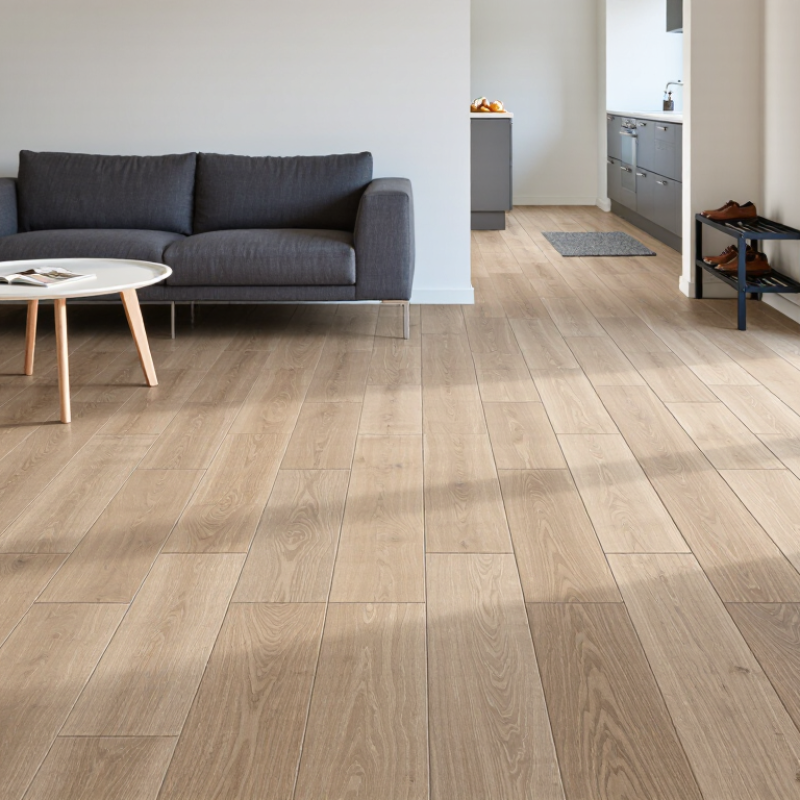
How to Choose the Best Vinyl Floor Tiles? Understanding Vinyl Floor Tile Types and Construction
Vinyl floor tiles are not one uniform product. Vinyl composition tile, or VCT, uses mineral filler and a relatively firm homogeneous body. Luxury vinyl tile, or LVT, usually combines a backing, printed design film, clear wear layer, and resilient core. Wood-plastic composite and stone-plastic composite products add rigid cores for better dimensional stability.
Construction determines performance more than surface appearance. A thicker wear layer can resist scuffs, but it cannot correct a damp or uneven subfloor. Check the wear layer in mils, then inspect the backing and locking edges. For wet rooms, review moisture testing requirements carefully. Some rigid tiles feel solid underfoot, yet they may transmit sound without suitable underlayment.
Grand View Research valued the global vinyl flooring market at about 40.8 billion dollars in 2023 and projected a 7.4% annual growth rate through 2030. That expansion creates more choices, not automatically better choices. ASTM F1700 covers solid vinyl floor tile, while ISO 10582 addresses heterogeneous PVC floor coverings. These standards help, but they do not replace installation judgment. A technical sheet may show impressive abrasion results. It may say little about sunlight, rolling loads, or winter grit. I would compare samples beside a window and near a doorway. Small details matter. Mistakes happen.
| Vinyl Floor Tile Type | Core or Construction | Typical Overall Thickness | Typical Wear Layer | Water Resistance | Underfoot Comfort | Dimensional Stability | Common Installation Method | Best-Suited Applications | Important Buying Considerations |
|---|---|---|---|---|---|---|---|---|---|
| Glue-Down LVT | Flexible multi-layer construction with a printed décor layer, transparent wear layer, and vinyl backing. | Approximately 2–3 mm | Approximately 0.15–0.55 mm | High | Moderate; depends strongly on the subfloor and adhesive. | Good when installed on a properly prepared, smooth subfloor. | Full-spread pressure-sensitive or hard-set adhesive. | Bedrooms, living areas, offices, retail spaces, and rooms requiring tight layout control. | Requires careful subfloor preparation. Replacement of individual tiles is relatively convenient, but installation is less forgiving of uneven surfaces. |
| Click-Lock LVT | Flexible or semi-rigid vinyl planks or tiles with machined interlocking edges; may include an attached underlayment. | Approximately 4–6 mm | Approximately 0.20–0.55 mm | High | Moderate to good, depending on thickness and underlayment. | Good, provided expansion gaps and room conditions follow the installation instructions. | Floating installation with a click-lock joint. | Residential renovations, apartments, bedrooms, living rooms, and moderate-traffic areas. | Usually faster to install than glue-down LVT. Check joint quality, subfloor flatness, transition details, and whether additional underlayment is permitted. |
| SPC Rigid-Core Tile | Stone-plastic composite core, decorative film, transparent wear layer, and balancing layer; the core is typically dense and mineral-filled. | Approximately 4–8 mm | Approximately 0.20–0.55 mm | Very high | Moderate; firmer and less yielding than WPC or thicker flexible LVT. | Very good under normal indoor temperature changes; excessive heat or direct sunlight can still affect the floor. | Usually floating click-lock installation. | Kitchens, entryways, bathrooms, rental properties, and high-traffic residential areas. | Very dense and resistant to indentation, but it can transmit more sound and may feel harder underfoot. Subfloor flatness remains important. |
| WPC Rigid-Core Tile | Wood-plastic composite or foamed polymer core combined with a vinyl décor layer, wear layer, and backing. | Approximately 5–8 mm | Approximately 0.20–0.55 mm | Very high | Good to very good; the thicker, more resilient core provides a softer feel. | Good, but the product should be protected from prolonged high heat and direct solar exposure. | Usually floating click-lock installation. | Living rooms, bedrooms, family rooms, and areas where walking comfort and sound reduction are priorities. | Typically more comfortable than SPC, but often less resistant to heavy point loads and indentation. Confirm furniture and rolling-load limitations. |
| Homogeneous Vinyl Tile | Single-layer vinyl material with color and pattern distributed throughout the tile rather than printed only on the surface. | Approximately 2–3 mm | Not normally specified as a separate printed wear layer | High | Moderate and relatively firm. | Good when fully bonded to a level, dry, and stable subfloor. | Full-spread adhesive; heat-welding may be used in some commercial systems. | Healthcare, education, commercial corridors, and other heavy-use interiors when specified for the application. | Surface appearance can often be renewed by professional maintenance because the color extends through the material. Follow the product’s cleaning and maintenance requirements. |
| Vinyl Composite Tile (VCT) | Composite tile made from vinyl resins, mineral fillers, pigments, and additives; it is less flexible than many modern LVT products. | Approximately 2–3 mm | Not normally specified as a separate wear layer | Moderate | Firm | Good when installed and maintained correctly, but seams and the surface require ongoing care. | Full-spread adhesive, normally over a prepared subfloor. | Schools, corridors, retail back-of-house areas, and budget-focused commercial interiors. | Usually requires periodic finishing or sealing to protect the surface. It is not the same as waterproof rigid-core flooring and is not ideal for constantly wet areas. |