What is Rubber Gym Mats and Why Are They Essential?
Rubber Gym Mats are an essential component in any fitness environment. They provide safety and comfort for users during workouts. According to Dr. Emily Sampson, an expert in sports safety, “The right flooring can drastically reduce injury risk.” This statement highlights the importance of quality mats.
These mats offer excellent shock absorption and support. They help prevent slips during intense exercises. Additionally, Rubber Gym Mats are durable and easy to clean. They endure heavy weights and regular wear and tear. However, not all mats are created equal. Some may degrade quickly, losing their effectiveness.
Choosing the right Rubber Gym Mats requires careful consideration. Look for thickness, material, and texture. Remember, investing in good mats is investing in safety. If they’re overlooked, the risk of injury increases. Reflect on your gym environment. Are you prioritizing safety and comfort with the right mats?
What Are Rubber Gym Mats and Their Composition?
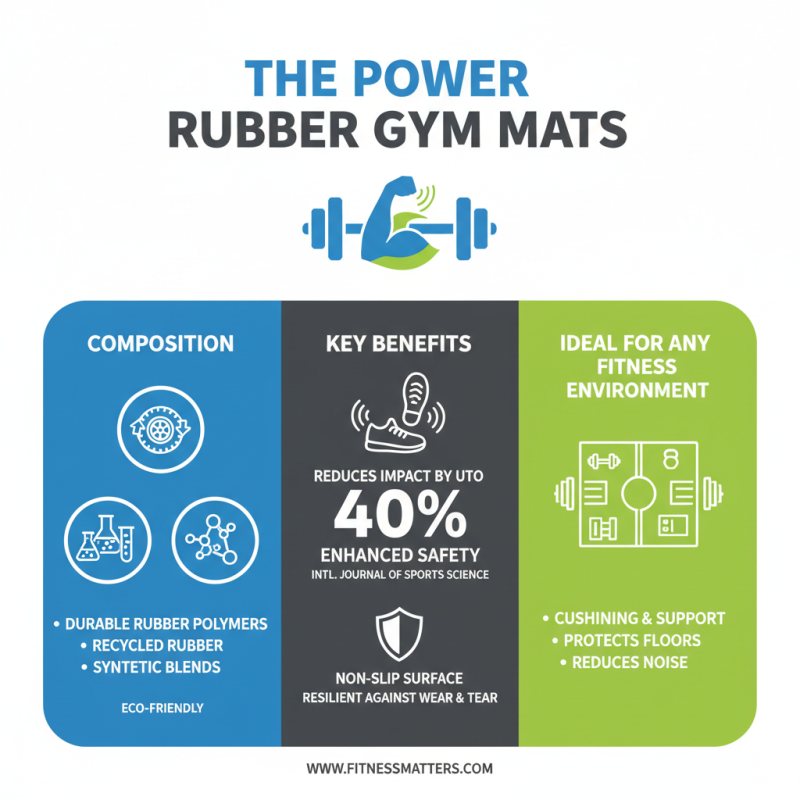
Rubber gym mats are vital for any fitness environment. Made primarily from durable rubber polymers, they provide excellent cushioning and support. The mats typically consist of recycled rubber or synthetic rubber blends. This composition makes them resilient against wear and tear while also offering a non-slip surface. According to the International Journal of Sports Science, rubber flooring can reduce impact by up to 40%, enhancing safety during workouts.
Choosing the right thickness can affect performance. Standard gym mats range from 1/4 inch to 1 inch thick. Thicker mats are ideal for high-impact activities, such as weightlifting or aerobics. For lighter exercises like yoga or pilates, thinner mats suffice. Remember, the right choice can influence your workout efficiency.
Tip: Regularly inspect your mats for wear and tear. Signs of damage could compromise safety. Replacing worn mats improves hygiene and performance. Also, consider the installation surface. Properly prepared subfloors can enhance the longevity and effectiveness of rubber gym mats. Investing time and resources in quality mats pays off in the long run.
Key Benefits of Using Rubber Gym Mats in Fitness Settings
Rubber gym mats are vital for any fitness environment. They provide an excellent surface for workouts, protecting both the floor and the equipment. According to industry reports, around 70% of gym injuries result from slips and falls. Rubber mats greatly reduce these risks by offering superior traction and shock absorption.
In fitness settings, rubber mats also contribute to sound dampening. They can lower noise levels by as much as 30%, creating a more pleasant workout atmosphere. This is particularly important in crowded gyms where noise can be a distraction. Additionally, studies show that rubber mats can extend the life of gym equipment by reducing wear and tear. They act as a buffer against heavy weights and equipment movement.
However, not all rubber mats are created equal. Some lower-quality options may wear out quickly or develop unpleasant odors. This can deter users and lead to a less inviting environment. Users should weigh the pros and cons before making a choice. Investing in high-quality mats could save money in the long run. Inadequate flooring can lead to costly damage or injuries. Careful selection is essential for any gym looking to enhance its space.
Key Benefits of Using Rubber Gym Mats in Fitness Settings
Market Trends and Growth in Rubber Gym Mat Production
The rubber gym mat market is evolving rapidly. Research shows that the global rubber gym mat production is projected to grow significantly over the next few years. Analysts expect an annual growth rate of around 6% from 2023 to 2030. This increase reflects a growing awareness of fitness and well-being among consumers. More gyms and home workout spaces are prioritizing safety and comfort.
Several factors drive this growth. The rise of fitness culture, especially post-pandemic, has led people to invest in their health. Rubber mats provide essential cushioning for various workouts. They also help absorb impact, reducing injuries. Moreover, the demand for eco-friendly products is influencing material choices in manufacturing.
However, not all rubber gym mats are created equal. Quality varies across manufacturers, and consumers often face challenges in selecting the right fit. Some mats lack durability, leading to quick wear and tear. Additionally, pricing can be inconsistent, causing confusion among buyers. The market still has room for improvement in education and transparency about product specifications.
What is Rubber Gym Mats and Why Are They Essential? - Market Trends and Growth in Rubber Gym Mat Production
| Dimension |
Standard Size (inches) |
Thickness (mm) |
Market Growth Rate (2023) |
Estimated Market Size (USD Million) |
| Small |
24 x 48 |
10 |
5.5% |
150 |
| Medium |
36 x 72 |
15 |
6.2% |
220 |
| Large |
48 x 96 |
20 |
7.0% |
300 |
| Custom |
Varies |
10-30 |
8.5% |
400 |
Comparative Analysis: Rubber Gym Mats vs. Other Flooring Options
Rubber gym mats are increasingly popular in fitness spaces. They provide safety, durability, and comfort. A comparative analysis shows that they outperform other flooring options like carpet, hardwood, and tiles in many aspects.
Studies indicate that rubber flooring reduces the risk of injury significantly. In a gym report by the American Council on Exercise, 77% of gym injuries result from slips or falls. Rubber mats provide excellent traction, even when wet, mitigating this risk. In contrast, carpet can harbor bacteria and allergens. Hardwood may look appealing, but it lacks the cushioning needed for high-impact exercises.
Additionally, rubber mats absorb sound well. According to research from the National Institute of Health, ambient noise levels in gyms can be distracting. Rubber flooring keeps noise levels down, enhancing the workout experience. Other materials, like tiles, can amplify sounds, creating an uncomfortable environment. Choosing the right flooring impacts both safety and ambiance in a gym setting. Evaluating these options critically helps facility managers create safer, more effective workout spaces.