What is Weight Lifting Mats and How Do They Improve Your Workout?
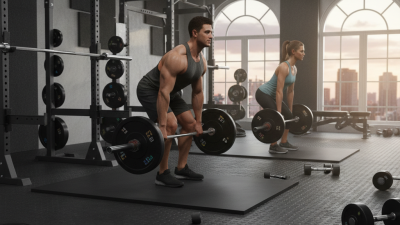
Weight Lifting Mats are essential for anyone serious about their strength training routines. These mats provide a stable surface, reducing the risks of injury during workouts. They help absorb impact when weights are dropped, protecting both your equipment and flooring.
Using Weight Lifting Mats can enhance your workouts significantly. The right mat gives you better grip and stability. This improves your form and performance during lifts. Remember that not all mats are created equal. Some may wear out quickly or lack the necessary grip for heavy lifts. It’s vital to choose a mat that meets your specific needs.
However, it’s important to reflect on your training environment. Are you using the right tools, like Weight Lifting Mats, to progress safely? Investing in quality mats can be a game changer. Still, you should regularly assess your setup. Your safety and performance depend on it.
What are Weight Lifting Mats?
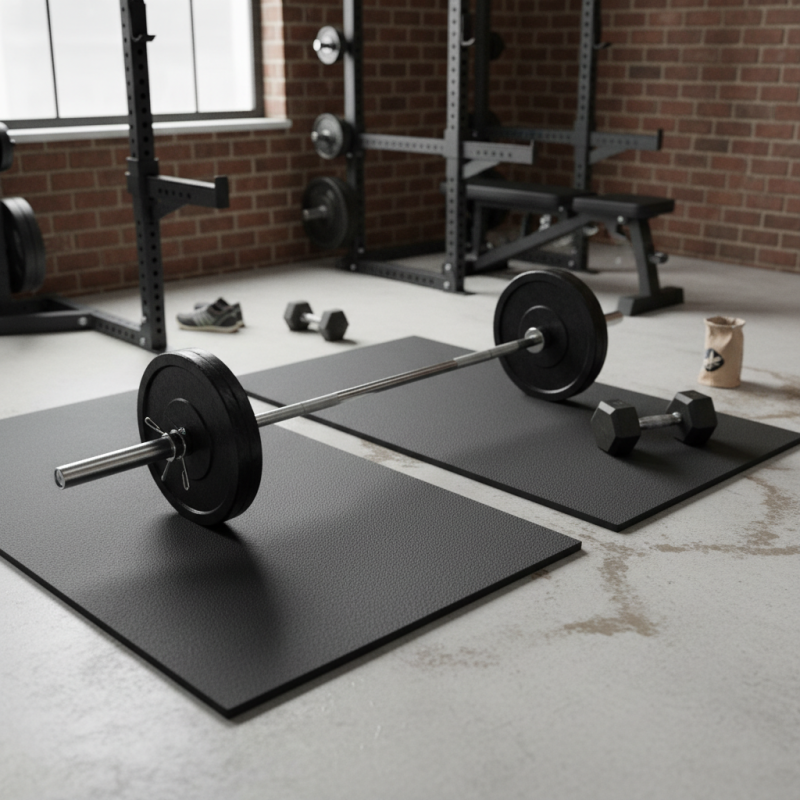
Weight lifting mats are essential tools for anyone serious about strength training. They provide a stable and safe surface for lifting weights. These mats come in various materials, but most are made from durable, shock-absorbent foam or rubber. This design helps to reduce the risk of injury during workouts. They also protect the flooring from damage caused by heavy weights.
Using weight lifting mats can notably enhance your training experience. They offer better grip, allowing for a more secure stance during lifts. This stability can lead to improved performance and confidence. However, not everyone considers the benefits. Some may overlook the need for a proper workout surface. This can lead to slips or falls, which are frustrating and potentially dangerous. Each lifter should reflect on their setup to avoid accidents. Investing in a quality mat can make a significant difference in comfort and safety.
Key Features of Weight Lifting Mats
Weight lifting mats are essential for any workout space. They provide a safe surface for lifting weights and protect your floors. One key feature is the non-slip texture. This helps prevent accidents during intense sessions. A good mat stays in place, letting you focus on your form.
Another feature is their thickness. Mats typically range from half an inch to an inch thick. This thickness absorbs impact, reducing stress on your joints. It also protects the flooring underneath. A well-cushioned surface makes heavy lifts feel more secure.
Tips: Consider your workout space. Mats come in various sizes. Choose one that fits well and covers the area you need. Regular cleaning is essential to maintain grip and hygiene. Remember, durability varies. Some mats wear out faster. Inspect them for damage to ensure safety during workouts.
What is Weight Lifting Mats and How Do They Improve Your Workout? - Key Features of Weight Lifting Mats
| Feature |
Description |
Benefits |
| Material |
Usually made from rubber, PVC, or foam. |
Provides durability and stability during workouts. |
| Thickness |
Typically ranges from 1/4 inch to 1 inch. |
Enhances shock absorption and reduces impact on joints. |
| Size Options |
Available in various sizes to accommodate different spaces. |
Allows for versatility in home or gym settings. |
| Non-Slip Surface |
Textured surface to prevent slipping. |
Enhances safety during lifting and other exercises. |
| Ease of Cleaning |
Most mats can be wiped clean or hosed down. |
Helps maintain hygiene in workout areas. |
| Portability |
Some mats are lightweight and easy to transport. |
Convenient for traveling or outdoor workouts. |
Benefits of Using Weight Lifting Mats in Your Workouts
Weight lifting mats are more than just a protective surface; they enhance your workout experience. These mats are designed to absorb shock and provide stability. According to a study by the American Council on Exercise, using appropriate flooring can reduce gym injuries by 50%. This is especially crucial for weight training, where improper footing can lead to accidents.
The benefits of using weight lifting mats extend beyond safety. They also help with equipment maintenance. Dropping weights on a hard surface can cause damage. A report from the National Institute for Occupational Safety and Health highlights that equipment longevity increases with proper flooring, ultimately saving costs. Additionally, mats provide a comfortable space to perform various exercises, encouraging users to adopt better workout habits.
Some may overlook the simple act of mat maintenance, thinking it's unimportant. Yet, dirty or worn-out mats can harbor bacteria. In a fitness environment, cleanliness is vital. It’s a reminder that attention to detail, even in mat selection and care, can dictate the overall quality of your workout experience.
Types of Weight Lifting Mats Available on the Market
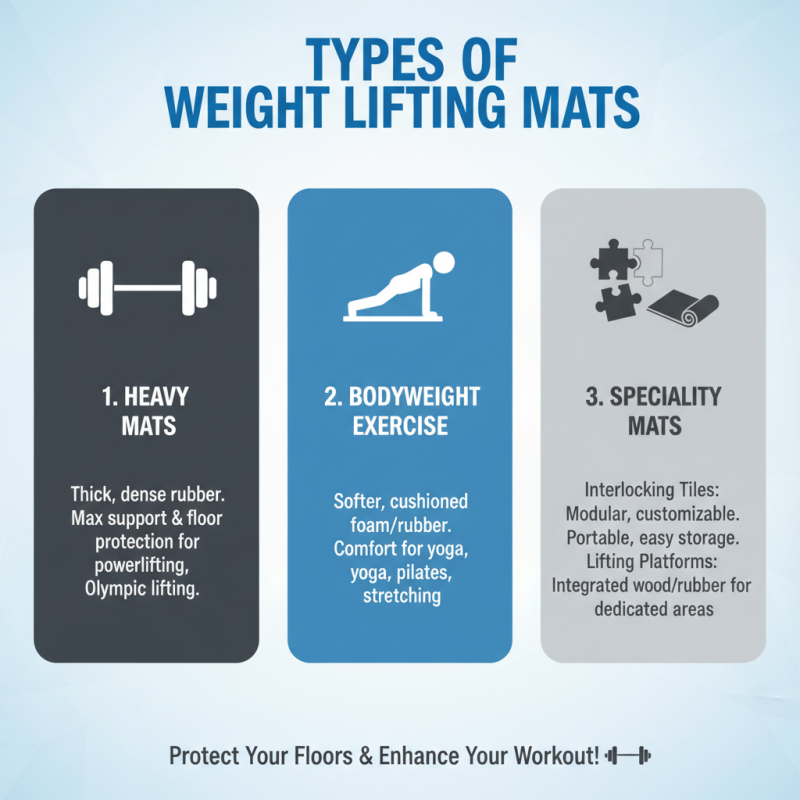
When it comes to weight lifting mats, there are several types available in the market. These mats are designed to provide support and protection during workouts. Some mats are specifically made for heavy weights, while others are suitable for bodyweight exercises. You might find options like interlocking tiles, roll-out mats, or specialized lifting platforms.
Interlocking tiles are popular among home gym enthusiasts. They offer flexibility in size and layout. You can easily replace a damaged tile, which is a pro. However, they may not always provide enough cushion for heavy lifting. Roll-out mats are portable and convenient. They can be used for multiple activities, but they might slide around during intense sessions.
Specialized lifting platforms tend to be more stable. They absorb impact well and are great for heavyweight lifters. Still, they can be bulky and expensive. Choosing the right mat requires careful consideration of your workout routine and available space. Reflecting on your needs is essential, as the perfect mat can truly enhance your training experience.
How to Choose the Right Weight Lifting Mat for Your Needs
Choosing the right weight lifting mat can greatly enhance your training experience. When looking for a mat, consider thickness first. A thicker mat will provide better cushioning for your joints. Look for mats that are at least half an inch thick if you’re using heavy weights.
Material matters too. Rubber mats are popular for their durability and grip. However, they can be heavy and hard to transport. Consider softer foam mats if portability is important, but they may wear out more quickly. Think about the space you have. A larger area allows more movement but can be difficult to manage in a small gym.
Don’t forget about maintenance. Some mats require special cleaning products. This can add to your overall cost and time. Assess your commitment to caring for your mat. Overall, prioritize your needs—comfort, durability, and convenience. Reflect on your workout habits to choose wisely. The perfect mat should support your growth, not hinder it.