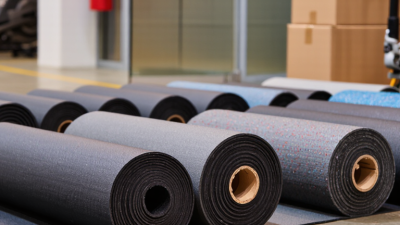
Choosing the right Rubber Vinyl Flooring can shape safety, comfort, and operating costs across international projects. In 2026, global buyers face more choices than ever, from cushioned rolls and interlocking tiles to dense commercial planks. Each type responds differently to impact, moisture, rolling loads, and cleaning chemicals. The best option depends on the building, not only the product photograph.
This guide examines the main Rubber Vinyl Flooring types for schools, hospitals, gyms, offices, retail spaces, and transport facilities. It considers wear layers, slip resistance, acoustic performance, dimensional stability, and installation methods. Real purchasing decisions also require product data sheets, sample testing, warranty terms, and verified factory experience. A flooring sample may look impressive under showroom lighting. It may perform differently beside a wet entrance or under heavy hospital equipment.
Details matter.
Buyers should compare regional standards, fire classifications, emissions data, and maintenance requirements before signing a contract. Reliable manufacturers can explain formulation, backing layers, batch consistency, and quality-control procedures without vague promises. Independent test reports add confidence, especially when products cross borders and climates. However, no flooring type is perfect. Rubber content, vinyl structure, adhesive choice, and subfloor preparation can create unexpected limitations. Even a premium product may fail when installers ignore moisture levels or expansion gaps. This article offers a practical starting point, while encouraging buyers to challenge specifications and test performance in realistic conditions. The most suitable choice may not be the cheapest or the most advanced. It should be the one that remains safe, stable, and maintainable throughout its expected service life.
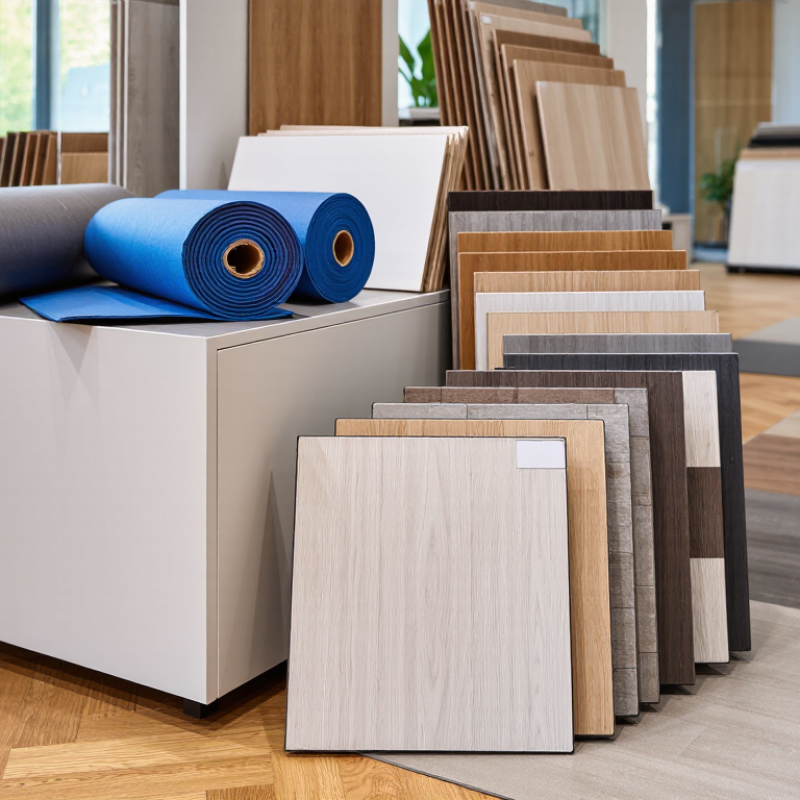
“Rubber vinyl flooring” is often used as a trade term, not a strict material category. True rubber flooring uses natural or synthetic elastomers. Vinyl flooring mainly uses polyvinyl chloride, plasticizers, stabilizers, pigments, and mineral fillers. The two materials feel similar underfoot, but their chemistry and performance differ.
Manufacturing starts with weighing and blending the ingredients. A heated mixer forms a uniform compound. Rollers then press it into sheets or tiles. Printed designs may sit beneath a transparent wear layer, while foam backing can improve comfort and reduce impact noise. During production, controlled heat fuses the layers. Quality teams measure thickness, dimensional stability, slip resistance, and wear. ISO 10582 covers heterogeneous PVC floor coverings, while ASTM F1700 addresses solid vinyl tile requirements.
Market reports show why buyers compare these materials carefully. Fortune Business Insights valued the global resilient flooring market at about USD 40.3 billion in 2023. That figure includes vinyl, linoleum, rubber, and related products, not rubber vinyl alone. The report indicates continued growth through 2030, driven partly by healthcare, education, and commercial renovation. Still, market forecasts are not guarantees. Product quality can vary widely between factories.
Tips: Ask for the technical data sheet, construction diagram, and test reports. Check whether “rubber vinyl” means a genuine rubber product or a PVC-based floor with rubber-like texture. Request samples. Touch the surface, bend the edge, and inspect the backing. A sample cannot reveal everything, but it can expose weak printing, uneven layers, or excessive odor. Select the floor according to traffic, moisture, cleaning chemicals, and installation conditions—not attractive color alone.
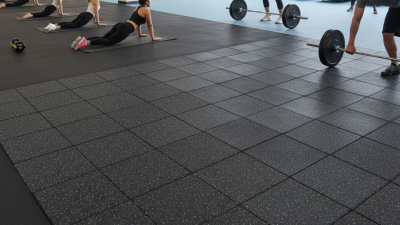
Rubber and vinyl flooring serve different practical needs across commercial, public, and residential projects. Rubber sheet flooring suits gyms, corridors, and stairways because it absorbs impact, reduces noise, and provides a firm walking surface. It performs well under rolling loads, but poor subfloor preparation can reveal uneven joints over time. Rubber tiles offer easier repairs. A damaged tile can be replaced without removing the whole floor.
Vinyl sheet flooring is widely used in clinics, classrooms, laboratories, and busy retail areas. Its continuous surface can limit dirt collection when seams are professionally heat-welded. Homogeneous vinyl has a consistent pattern through its full thickness, making it suitable for heavy traffic and repeated maintenance. Heterogeneous vinyl adds layered backing and decorative designs. Luxury vinyl tile provides realistic wood or stone effects for offices, hotels, and shops, while remaining easier to install than many natural materials.
Wet rooms need slip-resistant vinyl with a tested surface rating, not merely a rough appearance. Textured flooring may improve traction, yet it can require more detailed cleaning. Rubber flooring also needs protection from unsuitable chemicals, sharp equipment, and prolonged moisture. In real projects, appearance often receives too much attention. Load type, rolling frequency, moisture testing, seam quality, and cleaning routines matter more. No material is perfect. A flooring sample may look convincing, but daily use reveals the weaknesses.
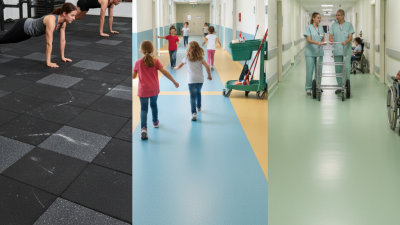
Rubber and vinyl flooring meet different performance needs, even when both look similar. Rubber tiles provide strong impact resistance in gyms, corridors, and busy public areas. Vinyl sheets offer excellent moisture protection, especially in clinics, kitchens, and transport facilities. Luxury vinyl planks create a warmer visual effect, but seams require careful installation and inspection.
Durability depends on more than thickness. A dense wear layer, stable backing, and accurate subfloor preparation reduce dents and curling. In busy projects, I check sample pieces under rolling loads and repeated foot traffic. Small defects often appear at doorways first. This simple test can reveal weaknesses before shipment or installation.
Safety deserves equal attention. Choose surfaces with verified slip resistance, low emissions, and suitable fire performance for the project location. Textured rubber can improve grip near entrances, but deep patterns may trap grit. Maintenance should remain practical: routine dust removal, neutral cleaning agents, and quick spill response usually protect the surface. Avoid aggressive chemicals unless the technical sheet permits them. No flooring is maintenance-free. Even a reliable product may fail when installers ignore moisture testing, expansion gaps, or cleaning instructions. Global buyers should request complete test reports, installation guidance, and batch consistency records before approving large orders.
Global buyers should compare rubber and vinyl flooring by project conditions, not by appearance alone. Grand View Research estimates the global vinyl flooring market reached about USD 35 billion in 2023, with continued growth expected through 2030. Rubber flooring remains smaller, but it offers strong resilience in gyms, hospitals, schools, and transit areas.
Start with a measurable buying sheet. Record traffic levels, rolling loads, moisture exposure, slip resistance, acoustic needs, and cleaning chemicals. ASTM F1700 covers solid vinyl tile requirements, while ISO 10582 addresses resilient floor coverings with PVC wear layers. These references help buyers compare thickness, dimensional stability, and surface performance across suppliers. Do not compare price per square meter only. Installation waste, subfloor preparation, freight volume, and replacement cycles can change the final cost.
Rubber often feels softer underfoot and handles impact well. Vinyl usually provides broader visual choices and easier pattern matching. For wet zones, request documented slip-test results, not vague claims. For healthcare projects, ask for cleaning compatibility and indoor-emission evidence. Research reports are useful, but their market definitions differ. One report may include luxury vinyl products; another may exclude them. That matters.
A useful specification includes sample approval, batch consistency, warranty limits, and third-party test records. Small details matter. I would also test a sample under local cleaning routines for several weeks. Laboratory results cannot fully predict humid warehouses, uneven concrete, or hurried installation. That is where buying teams sometimes misjudge.
| Flooring type | Construction and format | Typical product thickness | Wear surface | Moisture and cleaning | Impact and sound | Installation considerations | Common applications | Global purchasing checks |
|---|---|---|---|---|---|---|---|---|
| Rubber sheet flooring | Solid or multi-layer rubber supplied in rolls; may be vulcanized or non-vulcanized. | Often about 2–4 mm for commercial interiors; confirm the specified product. | Rubber body is generally the wearing surface; some products have factory-applied finishes. | Typically water-resistant, but seams and perimeter details matter. Use cleaning products approved for the flooring. | Resilient underfoot and can help reduce impact sound; results depend on thickness, backing, and floor assembly. | Usually requires a smooth, prepared subfloor and compatible adhesive. Seams need careful planning and workmanship. | Healthcare, education, offices, corridors, and other areas needing resilient commercial flooring. | Check roll width, roll length, color consistency, adhesive availability, emissions documents, fire classification, and local slip-test requirements. |
| Rubber tile flooring | Individual molded or cut tiles; available in varied textures and thicknesses. | Commercial interior tiles are often about 3–10 mm; specialized gym tiles may be thicker. | Usually a through-body rubber surface, with texture and color formed in the tile. | Generally tolerates routine damp cleaning. Water can enter joints, so it is not automatically a waterproof system. | Often provides good underfoot resilience and impact absorption; thicker products usually offer greater cushioning. | Adhered installation is common for commercial interiors. Tile layout can simplify localized replacement, but joints must be maintained. | Gyms, fitness areas, schools, circulation zones, and spaces where resilient or textured surfaces are useful. | Confirm tile dimensions, thickness tolerance, edge profile, batch color variation, weight per carton, and replacement-stock availability. |
| Luxury vinyl tile (LVT), glue-down | Layered vinyl tile or plank, typically with a printed design layer and protective transparent wear layer. | Commonly about 2–5 mm overall, depending on product construction. | Commercial wear layers are commonly specified around 0.3–0.7 mm; verify the actual product data. | Vinyl itself resists water, but seams, edges, and subfloor conditions affect performance. Clean with vinyl-compatible products. | Moderate underfoot comfort; acoustic performance depends on the product, adhesive, and floor assembly. | Requires a flat, dry, prepared subfloor and compatible adhesive. Installation quality affects appearance and long-term bond. | Retail, offices, hospitality, education, and other commercial interiors seeking varied visual designs. | Compare wear-layer thickness, total thickness, dimensional tolerances, adhesive specification, emissions reports, fire tests, and carton coverage. |
| Rigid-core click vinyl (SPC) | Click-lock planks or tiles with a rigid stone-plastic-composite core and layered vinyl surface. | Often about 4–7 mm overall, sometimes with an attached backing layer. | Wear layers commonly fall around 0.3–0.55 mm in many commercial offerings; check the technical sheet. | The planks are generally water-resistant, but perimeter detailing and installation instructions determine whether water can reach the subfloor. | Rigid construction can feel firm. Attached underlay may affect sound, but acoustic results must be assessed for the complete floor assembly. | Floating click installation can reduce adhesive use. The subfloor still needs to meet flatness requirements, and movement gaps may be required. | Residential and light-to-moderate commercial interiors where floating installation is preferred; suitability depends on product rating. | Check commercial-use approval, locking-system strength, temperature limits, expansion requirements, attached-pad details, and warranty conditions. |
| Homogeneous vinyl sheet | Single-layer vinyl sheet with color and pattern extending through the material; seams can be heat-welded where specified. | A common commercial specification is approximately 2 mm; product ranges vary. | No separate printed wear layer in the same way as layered LVT; the homogeneous material can be maintained according to its finish and care instructions. | When correctly installed with suitable welded seams and detailing, it can support hygienic cleaning routines. Do not assume every installation is watertight. | Generally firm and resilient; acoustic performance depends on backing, underlay, and the building floor assembly. | Needs a well-prepared subfloor. Sheet layout, adhesive, seam welding, and coved skirting may require trained installers. | Healthcare, laboratories, education, and commercial areas with frequent cleaning requirements, subject to local specifications. | Confirm sheet width, welding rod compatibility, hygiene and chemical-resistance data, fire classification, emissions, and installer capability. |
Notes: Thicknesses and wear-layer ranges are indicative examples for common product categories, not universal specifications. Performance varies by formulation, construction, test method, installation, and use conditions. Before purchase, compare current technical data sheets and test reports against the destination market’s applicable standards and project requirements.
Global buyers in 2026 are comparing rubber flooring, vinyl sheets, and luxury vinyl tiles for demanding interiors. Homogeneous rubber suits gyms, corridors, and healthcare areas requiring resilience and slip resistance. Commercial vinyl offers detailed patterns and simpler replacement when one section is damaged. Do not judge performance from a showroom sample alone. A quiet hotel floor may fail under warehouse wheels. Experienced installers inspect subfloor moisture, levelness, and temperature before delivery. Concrete must be clean, dry, and free from curing compounds.
Installation quality often decides the floor’s real service life. Follow the project specification and applicable local building standards. Use the recommended adhesive, welding method, and seam treatment for each material. Keep rolls or tiles inside the installation area long enough to acclimate. Poor acclimation can create visible gaps. It happens more often than suppliers admit. Doorways, wet rooms, ramps, and heavy equipment zones need separate detailing. Record moisture readings and installation conditions for future maintenance claims.
Climate also changes product selection. Humid regions need strong moisture planning, while cold areas require careful transport and acclimation. Direct sunlight can increase surface temperature and cause color variation. Buyers should request technical data, fire testing, slip results, emissions information, and cleaning guidance. A dependable supplier explains limitations, provides batch records, and offers installation training. Ask for independent test reports, not only attractive brochures. Recycled content can be valuable, but it should not replace durability analysis. I have seen sustainable claims become weak when replacement costs are ignored.