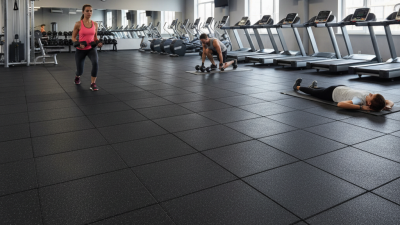
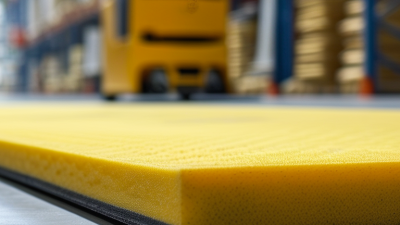
Choosing the 2026 top Gym Floor Mats requires more than comparing prices, colors, or thickness. A serious evaluation must consider impact control, traction, noise reduction, cleaning demands, odor, and long-term compression. The right mat should support heavy training while protecting concrete, joints, equipment, and nearby rooms. It should also fit the facility’s daily reality, including dropped weights, sweat, dust, and rushed maintenance.
As flooring specialist John McMullen explains, “The best gym floor is the one that protects movement without becoming the main event.” That principle remains useful when comparing rubber tiles, rolled rubber, interlocking EVA foam, and specialty turf systems. Dense recycled rubber often suits strength areas because it absorbs shock and resists equipment damage. EVA foam feels softer, but it may dent under racks or heavy benches. Rubber rolls create fewer seams, although installation can demand greater planning and professional handling.
No single product deserves an automatic first place. That assumption can fail. A quiet home gym may need cushioning, while a commercial weight room needs density and stability. Climate matters too. Warm, poorly ventilated spaces can expose odor problems that product brochures rarely emphasize. Installation quality also changes performance; even excellent Gym Floor Mats can shift on dusty or uneven surfaces.
This guide examines leading options for 2026 through practical evidence, material performance, user experience, and maintenance needs. It also questions common claims, because durability ratings do not always reflect real training conditions. The strongest choice is not always the thickest mat. It is the one that matches the room, the training style, and the people using it every day.
What makes a gym floor mat suitable for 2026?
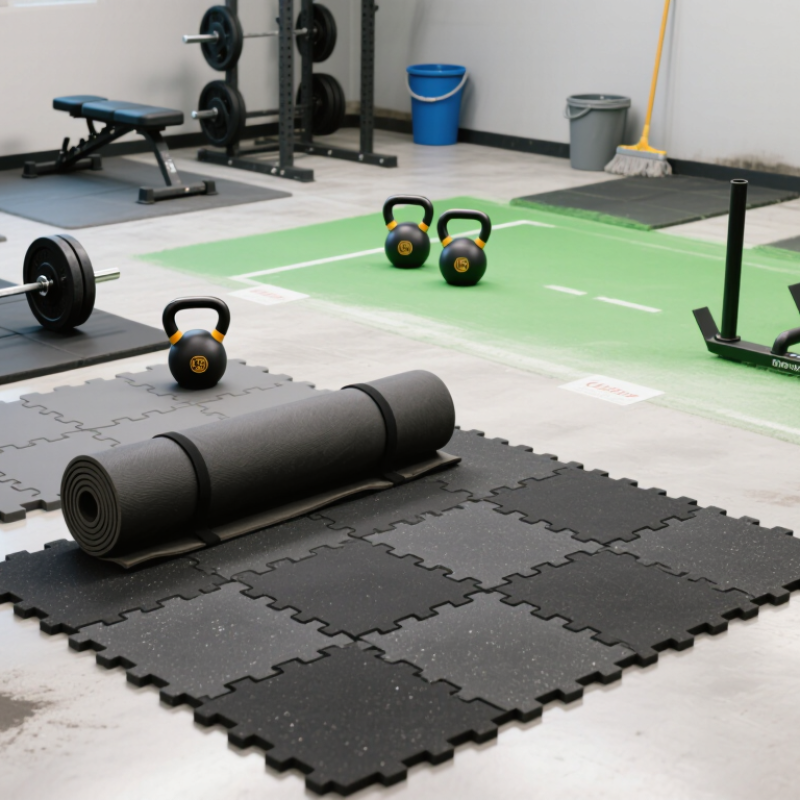
It must handle heavier training, faster cleaning, and changing workout zones. The American College of Sports Medicine’s Worldwide Survey of Fitness Trends 2025 ranked traditional strength training among the leading global trends. That matters. A mat should resist compression from racks, dumbbells, and repeated footwork without creating unstable edges.
Material choice affects safety and maintenance. Dense rubber or multilayer surfaces usually absorb impact better than thin foam. Look for documented testing under ASTM F1292 or comparable impact-attenuation standards. Those figures are more useful than vague claims such as “professional quality.”
The Health & Fitness Association reported strong global facility participation in recent industry research, increasing pressure on operators to reduce downtime. A sealed, low-porosity surface can support faster cleaning, especially around sweat-heavy lifting areas. Still, chemical resistance must be verified, not assumed.
Fit matters more than appearance. Mats should lie flat, resist curling, and match the equipment’s load path. Leave no gaps where grit can collect.
I once underestimated edge movement during sled work. That small detail changed the whole training feel. Ventilation also deserves attention, because trapped moisture can damage subfloors and create unpleasant odors.
The Global Wellness Institute’s 2024 market report valued the wellness economy at over 6 trillion dollars, but spending growth does not guarantee better installation. A beautiful mat can still fail under poor drainage, weak subfloor preparation, or careless cleaning.
What Are the 2026 Top Gym Floor Mats?
How to Compare the Main Types of Gym Floor Mats
Choosing a gym mat starts with the training, not the color. In my floor checks, rubber mats handled dropped weights and repeated foot traffic best. They felt stable under racks and reduced sharp impact noise. Dense rubber also resists moisture, but it can smell strongly when newly installed. Ventilation matters during the first few days.
EVA foam feels softer and costs less. It suits stretching, yoga, bodyweight exercises, and children’s activity areas. However, heavy benches can leave permanent dents. Foam edges may also separate when the floor is uneven. I once chose thick foam for a small training room, then regretted it after rolling equipment across the surface. Softness was useful, but durability was not.
PVC tiles offer a practical middle ground. Their interlocking edges install quickly and allow damaged sections to be replaced. They clean easily after sweaty sessions, though smooth surfaces may become slippery when wet. Check the underside for secure grip. For weightlifting zones, thick rubber tiles remain the safer comparison point. For mobility areas, EVA foam provides better comfort. No type wins every test. Measure the room, inspect the subfloor, and consider noise, cleaning time, impact level, and ventilation before ordering.
A practical comparison of common gym flooring mat types for home gyms, strength areas, functional training spaces, and general exercise rooms.
| Gym Floor Mat Type | Typical Material | Common Thickness | Impact & Sound Control | Durability Under Weights | Water & Sweat Resistance | Maintenance | Installation | Best Use | Main Limitation |
|---|---|---|---|---|---|---|---|---|---|
| Rubber Roll Flooring | Recycled or virgin vulcanized rubber | 8–19 mm for general gyms; thicker options are available for heavy lifting | Very good impact absorption and excellent reduction of vibration and equipment noise | ★★★★★ | Highly resistant to sweat and water; seams should be sealed in wet areas | Sweep or vacuum regularly; damp-mop with a mild, non-oil cleaner | Usually requires accurate measuring, cutting, and adhesive or seam management | Commercial gyms, weight rooms, racks, and large training areas | Heavy, difficult to reposition, and may have a noticeable rubber odor when new |
| Rubber Interlocking Tiles | Dense rubber tiles with puzzle-style edges | 10–30 mm is common for strength and functional training | Very good impact control; thicker tiles provide better protection for subfloors | ★★★★★ | Good resistance to moisture and sweat; water can collect beneath tiles if the floor is not dried | Lift individual tiles for cleaning underneath; use mild detergent and avoid petroleum-based products | Loose-lay installation is generally fast and does not require permanent adhesive | Home gyms, free-weight zones, and rooms requiring modular replacement | Edges can separate if the subfloor is uneven or tiles are not fitted tightly |
| Virgin Rubber Mats | New, non-recycled rubber, often with a more uniform density | 6–19 mm for equipment and general strength areas | Very good shock absorption with relatively consistent performance | ★★★★★ | Excellent resistance to sweat, water, and frequent cleaning | Low-maintenance; sweep, vacuum, and damp-mop as needed | Available as rolls, tiles, or single mats; loose-lay formats are simple to install | Treadmill areas, weight benches, dumbbell zones, and premium home gyms | Typically costs more than recycled rubber and can still be heavy |
| EVA Foam Mats | Closed-cell ethylene-vinyl acetate foam | 10–25 mm is common for home exercise and light training | Excellent cushioning for bodies and floor exercises; limited protection from concentrated heavy impacts | ★★★☆☆ | Closed-cell foam resists water, but seams and textured surfaces may hold sweat | Easy to sweep and wipe; avoid harsh solvents and excessive heat | Lightweight puzzle tiles are quick to assemble and remove | Yoga, stretching, Pilates, children’s exercise, and low-impact workouts | Can dent, tear, or compress under heavy racks, benches, and sharp equipment feet |
| PVC Interlocking Tiles | Polyvinyl chloride with a dense, resilient surface | 4–8 mm for general fitness and multipurpose rooms | Moderate impact control; usually less cushioning than thick rubber | ★★★★☆ | Good water resistance and easy-to-clean surface; seams should be kept dry when possible | Low-maintenance; sweep and damp-mop with a neutral cleaner | Fast modular installation; some systems require adhesive in high-traffic areas | Cardio rooms, studio classes, multipurpose fitness spaces, and light equipment | Can be damaged by sharp loads and may offer less sound isolation than rubber |
| Carpet Tiles for Gyms | Tufted or needle-punched synthetic carpet, commonly polypropylene or nylon | Approximately 5–10 mm including backing | Good reduction of footfall noise; limited shock absorption for dropped weights | ★★★☆☆ | Some resistance to surface moisture, but prolonged wetness can affect backing and subfloor | Requires frequent vacuuming; stains and embedded dirt need prompt treatment | Modular tiles are relatively easy to replace, but the subfloor must be clean and dry | Office fitness rooms, light cardio areas, and low-impact training | Not suitable for repeated heavy drops, wet environments, or high-sweat strength zones |
| Gym Turf Rolls | Synthetic polyethylene or polypropylene fibers with a dense backing | About 10–25 mm pile height, depending on the training design | Good traction and moderate cushioning; limited sound reduction for heavy impacts | ★★★★☆ | Resists sweat and light moisture; drainage and drying depend on the backing and subfloor | Regular vacuuming or brushing is needed; clean spills promptly | Roll installation requires careful alignment and may need adhesive or seam tape | Sled pushes, agility drills, sprint work, and functional training lanes | Can be difficult to clean after chalk, dirt, or spilled liquids; not designed for repeated weight drops |
| Horse-Stall-Style Rubber Mats | Very dense, heavy-duty rubber sheets, often with textured surfaces | 17–20 mm is common | Excellent protection against heavy equipment and dropped weights | ★★★★★ | Highly water-resistant; textured surfaces may require more detailed cleaning | Sweep or vacuum debris, then scrub or mop with a mild cleaner; allow to dry fully | Loose-lay installation is possible, but the mats are heavy and difficult to cut | Heavy lifting platforms, garage gyms, and demanding strength areas | Less refined appearance, substantial weight, and potentially strong initial odor |
In 2026, gym owners are looking beyond price when choosing floor mats. The material must absorb impact, resist compression, and stay stable under repeated loading. Rubber remains a strong choice for free-weight zones. Its dense structure reduces vibration and protects concrete from dropped dumbbells. It also grips well when shoes are damp. Rubber stays dependable. Yet it can release a noticeable odor in poorly ventilated rooms. That detail is easy to overlook.
EVA foam offers softer cushioning for stretching, bodyweight training, and children’s fitness areas. It is lightweight, easy to cut, and comfortable on knees. However, softer foam can show dents beneath racks or benches. High-density EVA performs better, but density alone does not guarantee long service. Check thickness, closed-cell construction, and seam fit. Moisture-resistant surfaces are useful, though water can still enter loose joints. PVC tiles provide a firm, cleanable surface and handle frequent movement well. They may feel less forgiving during floor exercises.
The most durable setup often combines materials by training zone. Use thick rubber under racks, and softer foam where users kneel or stretch. Measure the subfloor first. Small uneven areas can make quality mats rock or separate. In facility evaluations, I would inspect edge curling, odor, cleaning response, and recovery after heavy loads. A mat that looks perfect on delivery may flatten sooner than expected. That is a reminder to test samples for several weeks, not just one afternoon. Maintenance still matters. Sweep grit daily, clean spills promptly, and avoid harsh chemicals that weaken surfaces.
Which materials offer the best protection and durability?
EPDM and SBR rubber provide the strongest overall protection for heavy equipment and high-impact training. EVA foam offers excellent cushioning and is lightweight, while PVC performs well in moisture-resistant applications but generally provides less impact absorption. Ratings use a comparative 1–10 index based on typical material characteristics; actual performance depends on thickness, density, installation, and usage.
The best gym mat depends on movement, impact, equipment, and room conditions. The 2024 Global Report from the Health & Fitness Association recorded 184 million fitness members worldwide. That scale increases demand for safer, quieter, and easier-to-maintain flooring. Rubber tiles suit weight rooms because they resist dropped equipment and reduce vibration. Choose dense mats around 15–30 millimeters thick for free-weight zones. Thinner options can work beneath light machines.
Cardio areas need stable surfaces with controlled cushioning. A 6–12 millimeter rubber or PVC mat can support treadmills, bikes, and rowing machines. It should lie flat around moving parts.
For yoga, stretching, and mobility work, use softer foam or natural-fiber mats with enough grip. Excessive softness can make balance exercises harder. That detail is often overlooked.
Studios for martial arts, children’s training, or tumbling require impact-focused systems. Review ASTM F1292 impact-attenuation testing and relevant local sports-flooring guidance before purchase. For multipurpose rooms, interlocking mats simplify repairs and storage. However, their seams may collect dust and moisture. Regular inspection matters.
No mat solves every problem. Ventilation, cleaning, subfloor preparation, and drainage still affect performance.
My practical preference is cautious selection: test a small section, measure noise, and reassess after several busy weeks. Budget decisions are rarely perfect. Safety should remain the deciding factor.
Choosing a top gym floor mat in 2026 starts with risk control, not appearance. I have inspected training areas where thin mats shifted during lateral drills. That small movement caused scraped knees and awkward landings. Look for dense rubber or layered foam, stable edges, and enough thickness for the equipment. Weight training usually needs firm impact resistance. Stretching areas need softer cushioning. For wet rooms, textured surfaces improve traction, but texture can hold dirt. Measure the room carefully. Gaps become trip points.
Maintenance affects safety as much as material quality. Ask for cleaning instructions before buying. A mat should tolerate routine washing without swelling, cracking, or releasing a strong odor. Sweep loose grit daily, then use a mild cleaner and dry the surface fully. Check seams each week. Replace curled corners or compressed sections quickly. Do not assume heavier mats are automatically better. Some are difficult to lift, trap moisture underneath, and damage floors through prolonged dampness. My own preference is practical: choose sections that one person can inspect and move.
Value means more than the lowest purchase price. Compare expected service life, warranty terms, installation needs, and replacement availability. A cheaper mat may cost more after repeated repairs. Ask whether the surface remains stable after months of squats, sled work, and cleaning. Request a sample when possible. Test odor, grip, edge fit, and recovery after pressure. Perfect choices are rare. I once prioritized thickness and overlooked cleaning time. That mistake changed my buying checklist. Reliable records, clear specifications, and advice from experienced installers offer stronger evidence than attractive photographs.