Choosing the right Gym Floor Mats is a practical decision, not a simple equipment purchase. Commercial gyms face repeated drops, heavy foot traffic, sweat, cleaning chemicals, and constant movement. The floor must support safety, durability, comfort, and maintenance without disrupting daily operations.
Industry demand makes this choice more important. The Health & Fitness Association reported 72.9 million U.S. fitness facility members in 2023. That figure reflects intense and continuous floor use. The Global Wellness Institute also valued the global physical activity economy at approximately $1.1 trillion in 2023. More users mean greater pressure on surfaces, especially near squat racks, treadmills, lifting platforms, and functional training zones.
No single mat wins every room. That is the uncomfortable truth. Dense rubber tiles may absorb impact near free weights. Thicker roll flooring can reduce noise across large training areas. Interlocking EVA mats feel softer, but they may compress under commercial loads. Material thickness alone does not prove performance. Surface texture, density, seam stability, odor control, and cleaning requirements matter just as much.
This guide compares the top Gym Floor Mats for commercial gyms using practical performance criteria. It considers shock absorption, slip resistance, acoustic control, installation, maintenance, and long-term value. Recommendations should also reflect real operating conditions. A busy weight room is not a yoga studio. Product claims require careful checking against technical data, warranty terms, and recognized testing standards such as ASTM flooring guidance. Mistakes happen, even in well-planned facilities. The best decision balances evidence with the gym’s actual layout, budget, and training habits.
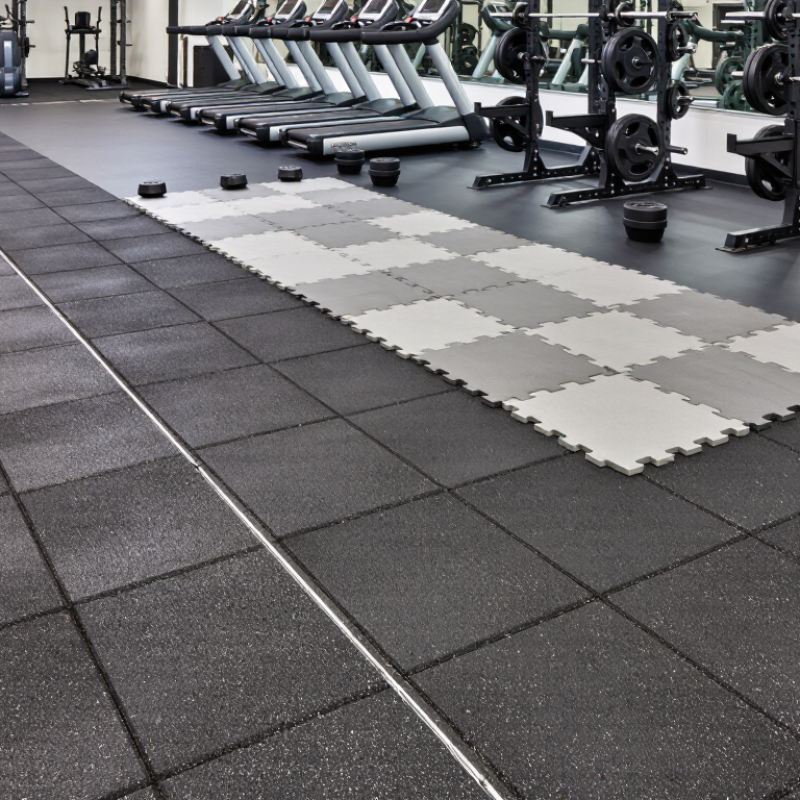
Commercial gyms need more than one “best” floor mat. The right choice depends on load, impact, noise, and traffic. In free-weight zones, dense rubber mats should handle dropped barbells and concentrated point loads. Look for stable, tightly bonded tiles with sufficient thickness, not simply the thickest option. A thick mat can still shift under repeated footwork.
Impact and sound require separate decisions. NIOSH’s Criteria for a Recommended Standard: Occupational Noise Exposure identifies 85 dBA over eight hours as a recommended exposure limit. Weight rooms should therefore use resilient flooring, lifting platforms, and controlled drop practices.
Shock-absorbing surfaces can reduce vibration, but they cannot replace good equipment spacing. EN 14904 reports sports-floor shock absorption between 25% and 75%, depending on system design and testing. That range matters. Too little cushioning feels harsh; too much may reduce stability.
Cardio areas need smooth, low-seam surfaces for heavy daily traffic. Group-training zones need traction and easier cleaning.
Tips: Map the facility before buying. Mark lifting, sprinting, stretching, and entry paths. Test a sample during peak hours. Listen for rattling, watch for edge curling, and measure whether carts roll smoothly. I would also review maintenance records, because neglected seams often fail before the rubber itself. One universal mat is convenient, but it is rarely the most professional answer.
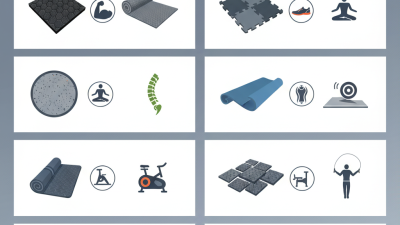
Commercial gym flooring must handle dropped weights, constant foot traffic, sweat, and daily cleaning. Rubber mats usually offer the strongest durability for free-weight areas. They absorb impact, reduce noise, and resist compression under heavy racks. However, rubber can retain odor if ventilation and cleaning are poor. It may also need occasional deep cleaning.
EVA foam feels softer and costs less, but it dents under benches and heavy machines. It suits stretching zones and light training areas rather than intense lifting spaces. PVC provides a smooth, water-resistant surface that is easy to mop. Yet sharp equipment edges can scratch it, and seams may lift when installation is rushed. Carpet tiles feel comfortable and reduce noise, but they hold dust and moisture. That creates a demanding maintenance routine in busy gyms. My experience suggests carpet works better in reception or cardio areas than beneath loaded barbells.
Tips: Match the material to each training zone. Sweep loose grit before mopping, because grit acts like sandpaper. Use neutral cleaners and follow the flooring supplier’s care instructions. Check seams, corners, and compressed spots every week. Replace damaged sections early. I once underestimated rubber odor after installation; stronger ventilation would have prevented complaints. Maintenance plans also need realistic closing times, since rushed cleaning leaves sweat beneath equipment. Weight-room flooring should be thick enough for the equipment, but excessive thickness can make wheeled machines unstable.
| Evaluation Factor | Rubber Mats | EVA Foam Mats | PVC Mats | Carpet Tiles |
|---|---|---|---|---|
| Typical Material Structure | Dense recycled or virgin rubber, often supplied as rolls, tiles, or interlocking mats. | Closed-cell ethylene-vinyl acetate foam with a lightweight, cushioned structure. | Flexible polyvinyl chloride with a smooth or textured wear surface. | Textile fibers attached to a backing, commonly supplied as replaceable modular tiles. |
| Typical Thickness for Commercial Use | 8–19 mm for general training; 30–50 mm for heavy free weights or lifting zones. | 10–25 mm for light exercise, stretching, and low-impact activities. | 3–10 mm for general fitness, multipurpose areas, and equipment zones. | Approximately 6–12 mm, depending on pile height and backing construction. |
| Resistance to Heavy Weights and Impact | Excellent. Best suited to racks, dumbbells, barbells, sleds, and repeated impact when correctly specified. | Low to moderate. Can dent, tear, or compress under concentrated loads and sharp equipment feet. | Moderate to good. Performs well under many machines but may be damaged by dropped weights or sharp edges. | Low. Better for traffic and light equipment than for impact from free weights. |
| Abrasion and Wear Resistance | Very high when the mat has adequate density and a suitable wear layer. | Low to moderate. Surface wear is more likely in high-traffic or footwear-heavy areas. | Good. Textured commercial surfaces generally handle regular foot traffic well. | Moderate. Traffic lanes may show crushing, matting, or discoloration over time. |
| Expected Service Life in a Busy Gym | About 8–15+ years with suitable thickness, installation, and routine care. | About 2–5 years in demanding commercial areas; potentially longer in light-use spaces. | About 5–10 years, depending on wear layer, traffic, cleaning, and equipment loads. | About 5–12 years; individual tiles can often be replaced before the entire floor is renewed. |
| Water and Moisture Resistance | Excellent. Non-porous rubber generally tolerates sweat and routine damp cleaning; seams still need attention. | Good. Closed-cell foam resists water absorption, but seams and damaged surfaces can retain moisture. | Excellent. Smooth, sealed surfaces are easy to wipe and dry. | Limited. Fibers can hold moisture and require prompt drying to reduce odor and microbial growth risks. |
| Routine Maintenance | Sweep or vacuum, then damp-mop with a neutral cleaner. Avoid excessive water and harsh solvents. | Sweep or vacuum and wipe with a mild diluted cleaner. Prevent standing water and aggressive scrubbing. | Sweep or vacuum, then mop with a neutral cleaner. Textured surfaces may need a soft brush. | Frequent vacuuming plus periodic low-moisture or hot-water extraction, following the backing manufacturer's guidance. |
| Ease of Spot Repair | Good for modular tiles; roll flooring is less convenient to repair locally. | Very good for interlocking tiles, although replacement pieces may show color differences. | Good when installed as tiles; sheet flooring may require a larger repair section. | Excellent. Damaged or stained tiles can usually be lifted and replaced individually. |
| Noise and Shock Reduction | Excellent for impact and equipment noise, especially at greater thicknesses. | Very good for cushioning and light impact, but not ideal for heavy drops. | Good for general equipment noise; performance depends strongly on underlayment. | Good for footfall noise, but less effective than thick rubber for weight drops. |
| Slip Resistance | Good to excellent with a suitable textured finish; sweat and dust should still be removed promptly. | Good when dry, but some foam surfaces become less secure when wet or worn. | Good when textured and properly cleaned; smooth surfaces can be more slippery when wet. | Good when dry; moisture, dust, and worn pile can reduce traction. |
| Relative Initial Cost | Medium to high, especially for thick, dense flooring. | Low to medium. | Medium. | Medium to high, depending on fiber, backing, installation, and acoustic requirements. |
| Best Commercial-Gym Applications | Free-weight areas, functional training zones, lifting platforms, sled lanes, and high-traffic strength floors. | Stretching areas, yoga, mobility work, children's activity zones, and low-impact studio spaces. | Cardio areas, selectorized equipment zones, multipurpose studios, and circulation areas. | Reception areas, corridors, group-class rooms, and spaces where appearance and sound absorption are priorities. |
| Overall Suitability for Heavy-Duty Commercial Gyms | Excellent — the strongest all-round choice for durability, impact protection, and manageable maintenance. | Limited — comfortable and economical, but not designed for concentrated heavy loads. | Good — practical for many general fitness areas when impact demands are moderate. | Selective — attractive and acoustically useful, but less appropriate for wet or heavy-impact zones. |
Note: Service life, performance, and maintenance requirements vary with product density, thickness, installation quality, traffic intensity, climate, cleaning chemicals, and equipment loads. Always confirm the flooring manufacturer's installation and care instructions.
Top Gym Floor Mats for Commercial Gyms: Which Are Best?
Apply EN 14904’s 25–75% Shock-Absorption Performance Benchmark
Commercial gym mats must manage impact without feeling unstable. EN 14904 identifies 25–75% shock absorption as a useful performance range. Below 25%, the floor may transmit excessive force to joints and the building structure. Above 75%, users may experience a soft, energy-draining surface during lifting or movement drills.
A mat should not be judged by thickness alone. Density, rubber composition, backing, and subfloor condition all influence performance. During a practical inspection, technicians should check seams, curling edges, and compression beneath heavy racks. A controlled test is more reliable than pressing the mat by hand. Laboratory results should also identify the complete floor system, not only the loose mat.
Use different performance priorities across training zones. Weight-drop areas need strong impact control and stable recovery. Functional zones may require better grip and moderate cushioning. Treadmill areas need firm support, low vibration, and accurate leveling. Maintenance matters too. Dust, moisture, and worn surfaces can change traction over time.
There is no perfect mat.
One important limitation is often overlooked. EN 14904 testing does not automatically prove that every commercial gym installation will perform identically. Subfloor movement, incorrect installation, and uneven loading can reduce real-world protection. Facility managers should request test documentation, inspect the installation regularly, and compare measured results with the intended training use.
Choosing commercial gym mats requires more than checking thickness or price. Slip resistance should be tested under dry and wet conditions, especially where sweat, cleaning water, and chalk collect. Ask for test details, including the test method, surface condition, and footwear used. A textured surface may feel secure, yet deep grooves can trap moisture and become difficult to clean.
Request current VOC emissions data from an independent laboratory. New mats can release a strong rubber odor, but smell alone does not prove unsafe emissions. Look for results covering relevant indoor-air limits and the actual product composition. Installers should also provide fire-rating documents for the complete flooring system, not only the mat. Adhesive, subfloor, and installation gaps can change performance.
ASTM test data should be specific, traceable, and easy to verify. Useful documents may address slip resistance, abrasion, impact absorption, tensile strength, or dimensional stability. Match each result to real gym use. A lifting area needs impact protection, while a cardio zone may need easier cleaning and stable footing. During inspection, walk on the mats with damp soles and check curled edges. It is a simple test, but not a substitute for laboratory evidence. One detail is often missed: test samples may be new, while commercial floors face years of sweat, disinfectant, weight plates, and dragged equipment. Ask how performance changes with aging.
Choosing the best gym floor mat starts with lifecycle cost, not the purchase price. In commercial gym audits, coverage usually creates the first surprise. A few uncovered edges can expose concrete, increase noise, and force earlier replacement. Measure training zones, walkways, and equipment footprints separately. Then calculate the installed cost per square metre, including delivery, trimming, adhesive, and labour.
Installation details affect long-term value. Interlocking mats may reduce labour, while heavy rolled flooring can require precise cutting and skilled fitting. Record the crew’s time and any subfloor repairs. Our early estimates were too optimistic because we ignored door clearances and uneven concrete. That mistake added two working days. It still changes how I review quotations.
Cleaning also deserves a realistic allowance. High-traffic areas may need daily sweeping and frequent damp cleaning. Use the cleaning method approved for the material, or surface damage may appear sooner. Track labour minutes, water, approved detergents, and temporary closures. Replacement planning should include lifting, disposal, storage, and lost training space. A simple calculation is: annual cost equals purchase, installation, cleaning, and replacement expenses divided by expected service years. Test this figure under heavy use, not showroom conditions. A cheaper mat can become expensive when edges curl, seams separate, or damaged sections cannot be replaced individually. Some assumptions will remain uncertain. Review them after six months of actual use.
How to read this chart
Estimated 10-year lifecycle cost for 1,000 sq. ft. of commercial gym flooring. Costs include initial coverage, professional installation, routine cleaning, and expected replacement allowance. Rubber tile generally has the highest upfront cost, while rolled rubber offers a strong balance between durability, maintenance, and long-term replacement cost.
Planning estimates in USD based on typical commercial flooring cost ranges; actual prices vary by region, subfloor condition, labor rates, traffic, and cleaning requirements.