Leave Your Message

Why Choose Rubber Floor Mat Roll for Global Buyers?

For global buyers, choosing the right Rubber Floor Mat Roll involves more than comparing prices. It requires practical knowledge of flooring performance, shipping conditions, and workplace safety. In busy workshops, gyms, retail stores, and loading areas, a mat must handle repeated footsteps, rolling carts, moisture, and occasional chemical exposure. A reliable product should offer stable dimensions, consistent thickness, sufficient slip resistance, and a surface that remains easy to clean.

Rubber Floor Mat Roll is valued because it covers large areas with fewer seams. Installers can cut it around columns, doorways, and irregular corners. This reduces fitting waste and simplifies replacement. Buyers should examine rubber composition, hardness, roll width, backing design, odor, and temperature tolerance. Supplier test reports and clear technical data can support better decisions. Independent inspection is also useful when order volume is high.

Yet, no single specification suits every market. A thick mat may improve cushioning, but it can increase weight and freight costs. A deeply patterned surface may improve traction, but it can collect dust. These trade-offs deserve careful review. Small details matter.

Experienced purchasing teams often request samples before approving bulk production. They check curling after unrolling, color consistency, edge accuracy, and cleaning performance. Packaging also matters, especially during long-distance transport. Moisture-resistant wrapping and secure roll protection can prevent avoidable damage. The process is not perfect. Product claims may sound stronger than real-world results. Careful testing, transparent documentation, and communication with qualified manufacturers help global buyers choose a Rubber Floor Mat Roll with confidence.

Why Choose Rubber Floor Mat Roll for Global Buyers?

What Is a Rubber Floor Mat Roll?

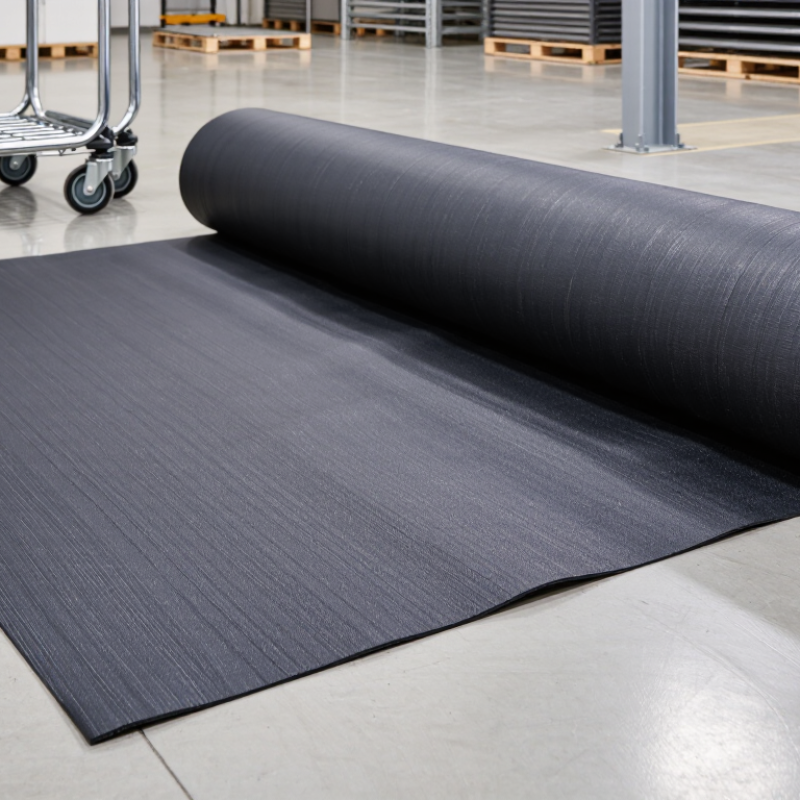
A rubber floor mat roll is a continuous sheet of rubber wound around a core. It is cut to fit floors, walkways, platforms, or work areas. Unlike separate tiles, a roll creates fewer joints where dust and moisture can collect. The surface may be smooth, ribbed, studded, or textured for added traction. It is not just a thick piece of rubber.

Global buyers usually select rolls by thickness, width, length, hardness, and surface pattern. Common thicknesses range from a few millimeters to over ten millimeters, depending on the intended load. Thinner rolls suit light-duty corridors and temporary layouts. Thicker materials can reduce impact and noise in busy work zones. Buyers should also check rubber composition, odor, temperature tolerance, and test documentation.

Installation looks simple, but small errors matter. The floor must be clean, dry, and reasonably level before unrolling the material. A curled edge may need time to relax. Cutting around columns also requires careful measurement. During site checks, I have seen attractive mats fail because the floor was damp underneath. That weakness deserves attention. Rubber can resist wear well, yet it is not immune to sharp tools, oil exposure, or prolonged sunlight. Product data should match the real environment, not an ideal showroom.

How Rubber Floor Mat Rolls Are Made and Designed

Why Choose Rubber Floor Mat Roll for Global Buyers?

How Rubber Floor Mat Rolls Are Made and Designed

Rubber floor mat rolls begin with material selection. Manufacturers blend natural rubber, synthetic rubber, and recycled tire rubber. The formula controls grip, flexibility, odor, and resistance to wear. Grand View Research estimated the global rubber flooring market at about USD 1.5 billion in 2023. It also projected steady growth through 2030. Demand is rising in gyms, workshops, transport areas, and commercial buildings.

Production usually includes mixing, calendaring, vulcanizing, and surface finishing. Large rollers press the compound into a continuous sheet. Heat and pressure then stabilize its structure. Diamond, ribbed, coin, and textured patterns improve traction and drainage. Thickness may vary from light utility grades to heavy industrial formats. Some producers use EPDM layers for color stability and weather resistance. The European Tyre and Rubber Manufacturers’ Association reported that end-of-life tires remain an important secondary raw material source. Still, recycled content can affect color consistency and odor. That detail deserves more attention.

Tips: Check roll width, thickness, hardness, and certified slip data before ordering. Ask for samples. Test them under real moisture, temperature, and cleaning conditions. A beautiful pattern is not enough. Installation errors can waste the material. Allow expansion space, use a clean subfloor, and confirm the correct adhesive. Measurements should be repeated. Mistakes happen.

Why Choose Rubber Floor Mat Roll for Global Buyers? - How Rubber Floor Mat Rolls Are Made and Designed

Data Dimension Typical Data or Manufacturing Detail How It Is Designed or Made Why It Matters to Global Buyers
Primary Rubber Material SBR, EPDM, NBR, natural rubber, or blended rubber compounds Rubber polymers are combined with fillers, pigments, processing oils, sulfur or other curing agents, and performance additives. Material selection can be matched to abrasion, oil, weather, temperature, and indoor-use requirements.
Common Thickness Approximately 2–20 mm for general commercial and industrial floor mat rolls Thickness is controlled during calendaring, extrusion, or compression molding, followed by measurement and trimming. Thicker rolls generally provide greater cushioning and load tolerance, while thinner rolls are easier to handle and cut.
Typical Roll Width Commonly about 1.0–2.0 m, depending on equipment and application The sheet is formed to a controlled width and then edge-trimmed to improve dimensional consistency. Wider rolls reduce the number of seams and can improve installation efficiency in large areas.
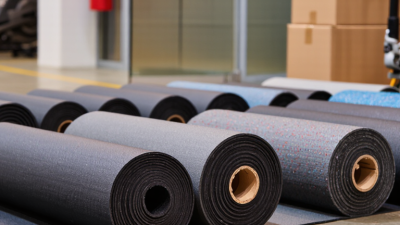
Typical Roll Length Often supplied in lengths of approximately 5–20 m, subject to thickness and weight Continuous rubber sheet is wound onto a core or rolled directly after cooling, inspection, and cutting. Roll format supports project-based cutting and usually creates less packaging waste than pre-cut pieces.
Surface Patterns Smooth, coin, diamond, ribbed, studded, checker, and textured surfaces Patterns are formed through engraved rolls, textured plates, or molds during the vulcanizing stage. Surface geometry influences traction, drainage, cleanability, appearance, and intended use.
Production Process Compounding → mixing → calendaring or extrusion → patterning → vulcanization → cooling → inspection → rolling Heat and pressure cure the compound, creating a stable elastic structure with the required surface profile. A controlled process helps maintain consistent thickness, hardness, pattern definition, and dimensional stability.
Hardness Range Commonly around 60–80 Shore A for many floor-mat applications Hardness is adjusted through polymer selection, filler loading, plasticizer level, and curing conditions. Lower hardness can improve comfort and impact absorption; higher hardness can support wear resistance and load stability.
Temperature Resistance Depends on compound; EPDM is commonly selected for outdoor weathering, while NBR is often selected for oil exposure. The polymer and additive package are chosen according to the expected operating environment. Correct material selection helps reduce cracking, swelling, hardening, or premature aging.
Slip-Resistance Design Textured profiles and drainage channels are commonly used where traction is important. Raised patterns and grooves increase contact edges and help move liquids away from the walking surface. Improved traction can support safer use in entrances, workshops, kitchens, fitness areas, and wet zones.
Abrasion and Impact Performance Rubber provides elastic recovery and resistance to repeated foot traffic and moderate mechanical impact. Compound formulation, thickness, reinforcement, and curing conditions are optimized for the expected load. Longer service life can reduce replacement frequency and maintenance disruption.
Customization Options Color, thickness, width, roll length, surface pattern, edge finish, and perforation can often be specified. Specifications are adjusted through compound formulation, tooling, cutting parameters, and finishing operations. Buyers can align the product with local installation methods, climate conditions, and project requirements.
Installation and Cutting Rolls can be cut on-site with suitable utility knives, floor-cutting tools, or workshop equipment. The flexible sheet format allows custom fitting around columns, corners, equipment, and irregular floor plans. On-site cutting can simplify logistics and reduce the need to order multiple pre-cut sizes.
Maintenance Routine cleaning generally involves sweeping, vacuuming, or washing with water and a compatible mild detergent. Non-porous or low-porosity surfaces and molded textures are designed for practical cleaning. Simple maintenance can reduce cleaning labor and help preserve appearance and traction.
Quality-Control Checks Typical checks include thickness, width, length, hardness, appearance, pattern accuracy, and packaging condition. Sampling plans and calibrated measuring equipment are used to verify compliance with the agreed specification. Clear inspection criteria help reduce dimensional variation and simplify incoming quality checks.
Packaging and Transport Rolls are commonly wrapped with protective film or kraft packaging and secured for palletized or container transport. Packaging is selected to protect edges and surfaces from moisture, dust, deformation, and handling damage. The compact roll format supports efficient storage and international shipment compared with many rigid floor products.

Note: The figures above are typical industry ranges and general manufacturing references. Final specifications should be confirmed according to the application, test method, installation conditions, and applicable local standards.

Key Benefits for Commercial and Industrial Flooring

Why Choose Rubber Floor Mat Roll for Global Buyers?

Commercial and industrial floors face oil mist, metal chips, dropped tools, and constant foot traffic. Rubber floor mat rolls create a continuous protective layer with fewer seams than loose tiles. Their textured surfaces can improve underfoot traction, especially near loading bays and production lines. However, performance depends on drainage, cleaning, and installation. Rubber is not magic.

The U.S. Bureau of Labor Statistics recorded 211,640 nonfatal workplace injuries involving floors, walkways, and ground surfaces in 2020. The Liberty Mutual Workplace Safety Index estimated that serious workplace injuries cost employers $58.5 billion in 2020.

These figures do not prove that mats prevent accidents. They show why flooring deserves practical risk control. Buyers should request tested slip-resistance data, thickness specifications, and resistance results for oils or chemicals used on site.

Rubber rolls also support worker comfort during long standing periods. Dense material can reduce vibration beneath equipment and soften minor impacts from falling tools. Large rolls simplify coverage across warehouses, gyms, workshops, and service corridors. They can also reduce replacement waste when damaged sections are cut out carefully. Installation still requires a level substrate, secure edges, and regular inspection. Poorly fitted edges may create trip points. Cleaning schedules matter more than many buyers expect. Regional temperatures, moisture, and fire requirements can change the correct specification, so local compliance checks remain essential.

How to Choose the Right Rubber Mat Roll

Why Choose Rubber Floor Mat Roll for Global Buyers?

How to Choose the Right Rubber Mat Roll

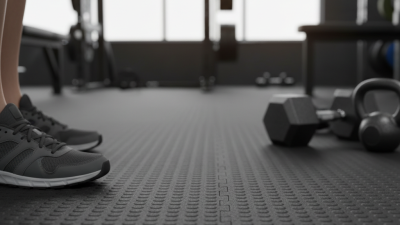
Choosing a rubber mat roll starts with the working environment, not the appearance. A gym floor needs impact resistance and stable grip. A workshop may need oil resistance, while a loading area needs strong wear protection. Measure the floor length and width carefully. A small calculation error can create costly seams.

Check the rubber type, thickness, surface pattern, and roll width. Dense rubber often supports heavy equipment better, but extra thickness is not always better. It can complicate cutting and raise shipping costs. Ribbed surfaces help move water away, while textured surfaces can improve traction under dusty shoes. Ask for hardness data, tensile strength, abrasion results, and temperature limits. Product samples are useful. Photos alone can hide uneven edges or strong odors.

Installation conditions also matter. Confirm whether the roll can be bonded, loose-laid, or mechanically fixed. The subfloor should be clean, dry, and reasonably level. I have seen buyers focus on price and overlook humidity during storage. That mistake can affect flatness and installation time. Request batch information, inspection records, packing details, and clear replacement terms. For international orders, verify dimensions, labeling, chemical restrictions, and safety requirements in the destination market. Documentation may seem tedious. It protects the purchase.

Why Choose Rubber Floor Mat Roll for Global Buyers?

How to Choose the Right Rubber Mat Roll

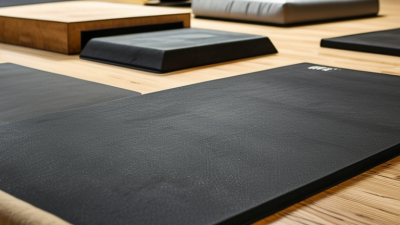
Rubber mat rolls are selected mainly according to application, traffic level, impact protection, and installation conditions. Thinner mats are commonly used for general flooring and anti-slip areas, while thicker mats provide better cushioning and protection for industrial, gym, livestock, and heavy-duty applications.

Installation, Maintenance, and Global Purchasing Considerations

Rubber floor mat rolls suit gyms, workshops, transit areas, and wet entrances because they cover large surfaces with fewer seams. Installation still demands discipline. Measure the room twice, then allow roughly 5% extra material for trimming and fitting. The subfloor must be clean, dry, level, and free from oil. A dusty concrete floor can weaken adhesive contact. I have seen installers blame the mat for failures caused by moisture underneath. That mistake is common.

Cut rolls with a sharp utility knife and a straightedge. Leave small expansion gaps near fixed walls where temperature changes are expected. Heavy rolls should be moved with two people, not dragged across fresh adhesive. Rubber is forgiving, but not magic. Follow the adhesive supplier’s curing time before placing equipment. ASTM F710 guidance for resilient flooring also emphasizes moisture testing on concrete substrates, although smaller projects often skip it.

Maintenance is simple when scheduled. Sweep grit daily in busy zones, then use a neutral cleaner and damp mop. Avoid petroleum solvents, aggressive solvents, and standing water. The World Health Organization reports about 684,000 fatal falls globally each year, making clean, stable walking surfaces a serious facility concern. Grand View Research’s 2024 rubber flooring analysis identifies commercial and fitness facilities as important demand areas, where durability and low maintenance influence purchasing. Global buyers should compare roll width, thickness tolerance, fire documentation, recycled content, packing method, and replacement availability. The World Bank’s 2023 Logistics Performance Index also shows how customs and transport quality vary between markets. A low unit price may become expensive after freight, storage, and damaged-edge claims. Supplier documents should be checked carefully. Mistakes happen.