Leave Your Message

2026 Best Vinyl Floor Tiles for Global Buyers?

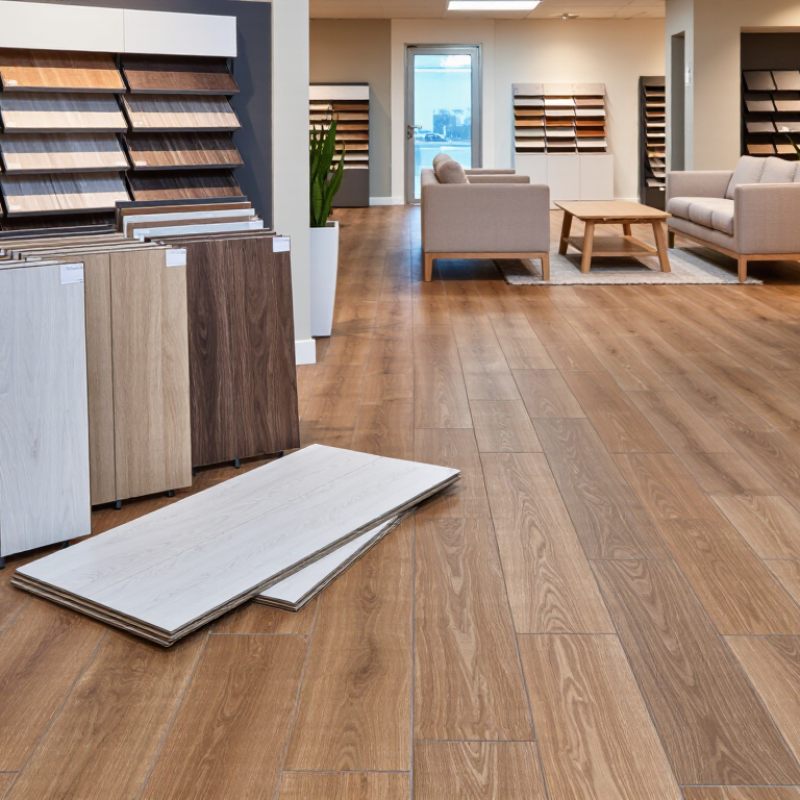
Choosing the right Vinyl Floor Tiles in 2026 requires more than comparing colors and advertised prices. Global buyers must examine construction, performance, installation methods, and supplier reliability. A warm oak pattern may look attractive online, yet its surface texture can feel different under warehouse lighting. Product samples reveal details that photographs often hide.

This guide evaluates Vinyl Floor Tiles for homes, offices, retail spaces, and hospitality projects. It considers wear-layer thickness, core stability, slip resistance, water protection, and acoustic comfort. Installation conditions matter too. A click system may reduce labor, while loose-lay tiles can simplify future replacement. However, neither option suits every subfloor. That assumption can fail.

Regional requirements also deserve careful attention. Buyers should request technical data sheets, test reports, safety information, and clear warranty terms. Certifications may differ between North America, Europe, Asia, and other markets. Check them with recognized testing organizations before placing a large order. Freight distance, carton dimensions, storage humidity, and minimum order quantities can change the final cost.

Small details matter.

Experienced sourcing teams should order samples, inspect color consistency, and test several tiles under expected traffic. They should also ask how suppliers handle batch variation and replacement claims. No product wins every market. A premium tile may be unnecessary for a quiet bedroom, while a budget option may wear quickly in a busy shop. This overview offers practical comparisons, acknowledges trade-offs, and helps buyers make decisions based on evidence rather than attractive sales language.
2026 Best Vinyl Floor Tiles for Global Buyers?

What Are Vinyl Floor Tiles and How Do They Work?

2026 Best Vinyl Floor Tiles for Global Buyers

What Are Vinyl Floor Tiles and How Do They Work?

Vinyl floor tiles are modular flooring pieces made mainly from PVC, mineral fillers, and stabilizers. Most contain several layers pressed into one durable surface. The printed layer creates wood, stone, or geometric patterns. A transparent wear layer protects the image from scratches, moisture, and daily traffic.

Some tiles use adhesive backing, while others connect through click edges. Adhesive tiles sit firmly on a prepared subfloor. Click tiles float above the floor and allow limited movement. This layered structure makes vinyl comfortable underfoot and easier to replace than many traditional materials. However, water resistance is not the same as waterproof installation. Gaps around walls can still allow moisture underneath.

Installation quality often matters more than appearance. The subfloor should be dry, clean, and flat. Small bumps may become visible through thin tiles. Dust can weaken adhesive, and poor temperature control may cause lifting. In real projects, this is where attractive products sometimes fail. I would not ignore it.

Global buyers should check wear-layer thickness, slip resistance, fire performance, and indoor-air certifications. Local climate also matters. Hot rooms may expand materials, while cold conditions can make adhesive less flexible. Request technical sheets and installation instructions before ordering. Compare sample colors in natural light, because online images can mislead. No tile suits every building, and cheaper choices may create higher replacement costs later.

2026 Best Vinyl Floor Tiles for Global Buyers: What Are Vinyl Floor Tiles and How Do They Work?

Vinyl floor tiles are resilient flooring products made primarily from PVC. They typically combine a backing layer, a stable core, a printed design layer, and a transparent wear layer. The wear layer protects the visual surface from abrasion, while the waterproof PVC structure helps resist moisture.

The chart shows common minimum wear-layer thickness bands used for vinyl flooring applications. Thicker wear layers generally provide better resistance to foot traffic and surface abrasion, but installation quality, subfloor preparation, moisture control, and product construction also affect service life. These are typical industry specification bands, not brand rankings.

Main Types of Vinyl Floor Tiles for Global Buyers

Vinyl flooring is not one product. Global buyers usually compare four main types: dryback LVT, click-lock LVT, sheet vinyl, and rigid-core tiles. Dryback LVT uses adhesive and suits large commercial areas. It creates tight joints but demands a very flat subfloor. Click-lock LVT installs faster, especially in renovations. However, careless locking can leave visible gaps.

Rigid-core tiles, including SPC and WPC constructions, offer stronger dimensional stability than flexible LVT. SPC feels firmer underfoot, while WPC usually provides warmer acoustic comfort.

Sheet vinyl has fewer seams and performs well in wet rooms. It is less convenient to repair locally. Homogeneous vinyl tiles remain practical for healthcare and education projects because their wear layer extends through the product.

Grand View Research forecasts the vinyl flooring market to grow at about 6.1% annually from 2024 to 2030. Mordor Intelligence also identifies renovation demand and waterproof performance as major growth drivers. These figures support long-term demand, but they do not guarantee every format will fit every climate. Humid regions need stable backing and moisture testing.

Export buyers should verify EN 14041, ASTM F1700, slip resistance, wear-layer thickness, and formaldehyde documentation. Small details matter.

A 0.3 mm wear layer may suit homes, while busy corridors often need 0.5 mm or more. One weakness remains: product names and test claims are not always consistent across markets. Clear technical sheets deserve more trust than attractive samples.

Key Performance Factors to Compare in 2026

For global buyers, vinyl floor tile performance depends on more than appearance. Start with the wear layer, because busy corridors and retail spaces create constant abrasion. A thicker layer usually improves durability, but it does not guarantee quality. Check test results, surface treatment, and expected traffic conditions.

Water resistance matters in kitchens, bathrooms, and humid regions. However, water-resistant tiles cannot correct poor subfloor preparation. Look for dimensional stability across temperature changes, especially when containers travel through different climates. Slip resistance deserves equal attention. A realistic test rating is more useful than a glossy product image. Also review emissions data, cleaning requirements, and installation guidance from reliable technical documents.

Tips: Request samples before ordering. Bend the sample gently, inspect the backing, and place it near a window for several days. Compare color, texture, and edge quality under natural light. Ask for test reports, warranty limits, and recommended adhesive conditions. Do not judge solely by price. A cheaper tile may require more replacement work. Still, even premium-looking flooring can disappoint when installers ignore moisture testing. No tile is perfect. The right choice balances durability, safety, maintenance, climate, and total project cost.

2026 Best Vinyl Floor Tiles for Global Buyers? — Key Performance Factors to Compare in 2026

Performance Dimension Dryback LVT SPC Click Flooring WPC Click Flooring Loose-Lay Vinyl Tile VCT / Vinyl Composite Tile
Typical construction Flexible multi-layer luxury vinyl tile or plank with adhesive installation. Rigid stone-polymer composite core with click-lock joints and a vinyl décor layer. Rigid wood-polymer or foamed composite core with click-lock joints and a vinyl décor layer. Dense, dimensionally stable vinyl tile designed to resist movement without full-spread adhesive. Vinyl-resin tile containing mineral fillers; commonly used in heavy-traffic institutional areas.
Typical overall thickness 2.0–3.0 mm 4.0–6.5 mm 5.0–8.0 mm 3.0–5.0 mm 1.5–3.2 mm
Typical wear-layer thickness 0.20–0.70 mm 0.20–0.70 mm 0.20–0.70 mm 0.30–0.70 mm Usually factory-finished; protection depends on the product specification and maintenance system.
Common commercial classification Class 31–34 products are widely available, depending on the wear layer and test results. Class 31–34 products are widely available; suitability depends on joint strength and test data. Commonly positioned for residential and moderate commercial use; verify the declared use class. Often supplied for commercial replacement and high-maintenance environments; verify the declared class. Frequently specified for commercial and institutional applications; verify the declared class.
Water resistance High at the surface High at the surface and core High at the surface; seams and perimeter still require correct installation High at the surface High at the surface; joints and subfloor preparation remain important
Dimensional stability Good when acclimated and bonded to a suitable subfloor High rigidity; temperature and direct-sun exposure must still be controlled Good, but generally more sensitive to heat than mineral-core rigid flooring Good when the subfloor is flat and perimeter conditions are suitable Good after installation; adhesive and subfloor moisture control are critical
Subfloor tolerance Requires a smooth, clean, dry and level substrate; imperfections can telegraph through. Requires a flat substrate; rigid boards do not correct major high or low spots. Requires a flat substrate; underlay compatibility must be confirmed. Requires a very smooth, clean and dry substrate for reliable placement. Requires careful leveling because the thin tile can reveal surface irregularities.
Installation method Full-spread pressure-sensitive or wet-set adhesive, depending on the specification. Floating click installation; perimeter expansion details are normally required. Floating click installation; expansion and underlay requirements vary. Loose-lay or perimeter-fixed installation, depending on room size and traffic. Adhesive installation, normally over a prepared and moisture-tested substrate.
Replacement and repair Individual tiles or planks can usually be replaced with localized adhesive removal. Individual boards can be replaced, but access may require disassembling adjacent rows. Individual boards can be replaced, but click joints may be stressed during removal. Very convenient for partial replacement in accessible areas. Individual tiles can be replaced, although adhesive removal and color matching may take time.
Underfoot comfort Moderate; improves with a resilient underlay or suitable substrate system where permitted. Moderate to firm because of the rigid mineral core. Generally warmer and softer underfoot than SPC because of the resilient core. Moderate to good, depending on the tile construction and subfloor. Firm underfoot and typically less cushioned than thicker luxury vinyl products.
Acoustic performance Moderate; impact sound depends strongly on the substrate and underlay. Moderate to low without an acoustic backing or compliant underlay. Generally better impact comfort than SPC, but project test results should be checked. Moderate; backing and installation quality affect sound transmission. Moderate to low unless installed over an acoustic system.
Slip-resistance information to request Manufacturer-declared wet slip result, such as EN 13845 or applicable local test data. Manufacturer-declared wet slip result and surface classification for the target market. Manufacturer-declared wet slip result and surface classification for the target market. Manufacturer-declared wet slip result, especially for entrances and wet cleaning areas. Manufacturer-declared wet slip result and maintenance requirements.
Fire-performance information to request Reaction-to-fire classification under the applicable local standard; result depends on the complete floor system. Reaction-to-fire classification must be verified for the complete product and underlay combination. Reaction-to-fire classification must be verified for the complete product and underlay combination. Reaction-to-fire classification must be verified for the complete installation system. Reaction-to-fire classification must be verified for the complete installation system.
Typical service environment Homes, offices, retail, hospitality and healthcare areas when the declared use class is appropriate. Homes, offices, retail and other areas requiring a rigid, water-resistant floating floor. Homes, hospitality and moderate commercial areas where comfort and acoustic performance are priorities. Occupied renovations, retail, offices and areas requiring rapid access for repairs. Schools, healthcare, retail and other high-traffic projects with planned maintenance.
Main buying advantage Low profile, broad design choice and efficient replacement of individual pieces. Rigid feel, strong water resistance and fast floating installation. Better comfort and acoustic potential than many rigid mineral-core products. Fast installation and convenient localized replacement. Established commercial format and durable performance with systematic maintenance.
Main buying risk Poor subfloor preparation or adhesive selection can cause telegraphing, gaps or bond failure. Uneven substrates, excessive heat and poor locking-joint installation can cause movement or joint damage. Greater sensitivity to heavy point loads and heat exposure than some mineral-core products. Movement, edge lifting or curling may occur if the substrate, perimeter or traffic conditions are unsuitable. Visible joints, adhesive failure or dimensional issues can result from moisture and subfloor problems.
Documents global buyers should request Technical data sheet, installation guide, declared use class, wear-layer data, slip and fire reports, VOC information and warranty terms. Technical data sheet, locking-system instructions, dimensional-stability data, use class, slip and fire reports, VOC information and warranty terms. Technical data sheet, temperature limits, underlay requirements, use class, slip and fire reports, VOC information and warranty terms. Technical data sheet, adhesive or perimeter-fixing requirements, use class, slip and fire reports, VOC information and warranty terms. Technical data sheet, adhesive and moisture-testing requirements, maintenance guide, use class, slip and fire reports, VOC information and warranty terms.
Buyer note: The figures above are typical market ranges rather than guaranteed values for every product. Final selection should be based on the supplier’s current technical data sheet, applicable local building regulations, installation environment, subfloor condition, temperature exposure, traffic level and required certification.

Best Vinyl Floor Tiles for Different Global Markets

2026 Best Vinyl Floor Tiles for Global Buyers

Best Vinyl Floor Tiles for Different Global Markets

Vinyl floor tiles perform differently across climates, building types, and maintenance habits. In humid Southeast Asian markets, choose water-resistant tiles with stable locking systems and textured surfaces. Proper subfloor preparation still matters. Moisture can damage even attractive flooring.

European buyers often prioritize low emissions, recyclable content, and documented product testing. Check technical sheets for indoor air quality, fire performance, and chemical compliance. North American commercial projects usually need thicker wear layers and strong dimensional stability. Busy corridors quickly reveal weak surfaces.

In the Middle East, intense sunlight makes UV resistance important near windows and entrances. Light colors can also reduce the visual effect of dust. Australian projects may require reliable slip resistance and impact performance, especially in schools and healthcare areas. Local standards must guide the final specification.

I have seen beautiful tiles fail on uneven concrete. That mistake is expensive. Request samples, test them under local lighting, and confirm installation guidance before ordering. A product suited to one market may be excessive or unsuitable elsewhere. No specification is universal.

Installation, Maintenance, Safety, and Lifecycle Costs

For global buyers in 2026, the best vinyl floor tiles balance installation speed, daily comfort, safety, and long-term value. Before ordering, confirm tile dimensions, thickness, wear-layer quality, and subfloor requirements. Local humidity can change installation results. A clean, flat, dry subfloor remains essential, even with forgiving click systems. Measure twice.

Experienced installers leave expansion space around walls and fixed cabinets. They also stagger joints to prevent visible lines. In cooler warehouses, tiles may need acclimatization before fitting. Cutting errors create waste, especially in narrow rooms. That cost is easy to underestimate. Professional moisture testing is worthwhile for concrete floors. Adhesives should match the flooring system and local indoor-air requirements.

Routine maintenance should use soft brooms, neutral cleaners, and limited water. Keep it dry. Grit near entrances can scratch the surface, so entrance mats reduce wear. Safety depends on slip resistance, stable installation, and smooth transitions between rooms. Never hide uneven subfloors with extra adhesive. Lifecycle cost includes purchase, underlay, labor, repairs, cleaning, and eventual disposal. A cheaper tile may need replacement sooner. A thicker tile is not automatically better; performance depends on construction and usage. No floor is perfect. Buyers should request technical sheets, test certificates, warranty terms, and regional compliance information before choosing. In busy commercial areas, a small repair kit can prevent larger replacement costs.