- Home
- About Us
- Products
- Solution
- Accessories Service
- Technicial Service
- Additional Service
- News
- Blog
- Contact Us
Leave Your Message
China’s Rubber Vinyl Tiles industry has moved beyond low-cost production. Leading manufacturers now combine resilient polymers, precision pressing, digital embossing, and stricter quality control. Their products appear in hospitals, schools, gyms, offices, and retail interiors.
Michael Turner, an independent flooring quality consultant, says, “A durable tile begins with honest material selection, not attractive surface printing.” His observation matters when comparing China’s top manufacturers. A glossy finish may look impressive under showroom lights. It may still fail under rolling loads, wet footwear, or uneven subfloors.
This guide examines ten notable Chinese manufacturers through practical buying criteria. These include rubber and vinyl formulation, dimensional stability, abrasion resistance, slip performance, color consistency, installation systems, and after-sales support. Certifications also deserve careful checking. A certificate number alone does not prove every production batch performs equally.
Site experience can reveal small but important differences. Watch how tiles recover after stacked storage. Check whether edges remain straight after temperature changes. Ask for test reports, sample thicknesses, fire ratings, and adhesive recommendations. Request references from comparable projects.
Some suppliers excel at custom colors. Others offer stronger export documentation or faster OEM development. Not every factory is equally transparent. That is the uncomfortable part.
Pricing can also mislead. A cheaper tile may require more adhesive, more cutting, or earlier replacement. This article presents China’s top ten Rubber Vinyl Tiles manufacturers as a practical comparison, not an unquestionable ranking. Specifications change. Markets change. Buyers should verify current factory data before signing contracts.

China Top 10 Rubber Vinyl Tiles Manufacturers
Rubber and vinyl tiles are resilient flooring products, but they are not identical materials. Rubber tiles usually contain natural or synthetic elastomers. Vinyl tiles use PVC, mineral fillers, pigments, and protective wear layers. The distinction matters. Rubber offers strong impact absorption and quieter footfall. Vinyl provides broad design flexibility, moisture resistance, and simpler routine cleaning.
Fortune Business Insights estimates the global vinyl flooring market will grow at about 5% annually through 2032. That growth reflects demand from housing, healthcare, education, and commercial interiors. A practical specification should examine more than appearance. Check slip resistance, indentation recovery, fire performance, chemical resistance, and dimensional stability. ASTM and ISO test methods can support comparisons, although test results do not guarantee identical site performance.
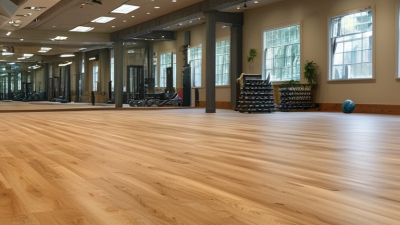
Rubber vinyl tiles commonly appear in gyms, corridors, classrooms, clinics, offices, and retail spaces. In a busy fitness room, dense rubber can soften dropped equipment and reduce sharp impact noise. In a hospital corridor, homogeneous vinyl can simplify cleaning and replacement. Subfloor moisture remains a frequent failure point. Even premium tiles may curl or debond over damp concrete. Installation temperature, adhesive selection, seam treatment, and rolling pressure deserve careful control. The category is not perfectly tidy; “rubber vinyl” is sometimes used loosely in product marketing. Buyers should request composition data, safety documentation, warranty limits, and independent test reports before comparing manufacturers.
Technical and application reference table for resilient rubber and vinyl tile flooring
| No. | Tile Category | Definition | Main Features | Typical Thickness | Common Applications |
|---|---|---|---|---|---|
| 1 | Homogeneous Vinyl Tile | A single-layer resilient tile with a consistent composition and color throughout its thickness. | High wear resistance, repairable surface, consistent appearance, and suitability for heavy pedestrian traffic. | 2.0–3.0 mm | Hospitals, schools, public corridors, retail areas, and transportation facilities. |
| 2 | Heterogeneous Vinyl Tile | A multi-layer vinyl tile combining a backing, printed design layer, wear layer, and protective surface finish. | Wide design flexibility, realistic patterns, improved dimensional stability, and easier decorative coordination. | 2.0–5.0 mm | Offices, hotels, healthcare interiors, education buildings, and commercial spaces. |
| 3 | Luxury Vinyl Tile | A decorative multi-layer vinyl tile designed to reproduce the appearance of wood, stone, concrete, or ceramic materials. | Water-resistant surface, strong visual realism, simple maintenance, and compatibility with many interior styles. | 2.5–6.0 mm | Homes, hotels, restaurants, offices, stores, and mixed-use developments. |
| 4 | Dry-Back Vinyl Tile | An adhesive-installed tile that is bonded directly to a properly prepared subfloor. | Low installation profile, flexible layout options, easy individual tile replacement, and strong subfloor contact. | 1.5–3.0 mm | Retail stores, offices, classrooms, healthcare rooms, and renovation projects. |
| 5 | Click Vinyl Tile | A floating tile with interlocking edges that connect without full-surface adhesive bonding. | Fast installation, limited wet adhesive work, convenient removal, and good suitability for selected renovation applications. | 4.0–8.0 mm | Residential interiors, temporary commercial spaces, offices, and refurbishment projects. |
| 6 | Rubber Floor Tile | A resilient tile manufactured primarily from natural or synthetic rubber compounds, often with molded or textured surfaces. | Excellent impact absorption, slip resistance, underfoot comfort, sound reduction, and good resistance to heavy traffic. | 3.0–8.0 mm | Gyms, fitness centers, playgrounds, corridors, stairways, and multipurpose facilities. |
| 7 | Conductive or ESD Tile | A resilient vinyl or rubber tile formulated to control electrostatic charge and provide a path to ground. | Controlled electrical resistance, reduced static buildup, durable surface, and compatibility with grounded ESD systems. | 2.0–3.0 mm | Electronic assembly rooms, laboratories, data centers, cleanrooms, and technical work areas. |
| 8 | Acoustic Rubber or Vinyl Tile | A resilient tile designed with a dense, elastic, or cushioned structure to help reduce impact and transmission noise. | Improved walking comfort, sound absorption or impact-noise reduction, durable wear surface, and low-maintenance cleaning. | 3.0–10.0 mm | Libraries, schools, offices, hotels, apartments, healthcare facilities, and quiet zones. |
| 9 | Heavy-Duty Industrial Tile | A thick rubber or vinyl tile engineered for demanding traffic, rolling loads, abrasion, and frequent cleaning. | High load-bearing capability, abrasion resistance, dimensional stability, and resistance to routine commercial chemicals. | 3.0–12.0 mm | Workshops, warehouses, service areas, factories, loading zones, and back-of-house facilities. |
| 10 | Tactile and Safety Tile | A textured rubber or vinyl tile incorporating raised patterns, directional indicators, or slip-resistant profiles. | Enhanced underfoot traction, visual or tactile guidance, improved accessibility, and suitability for transition or hazard zones. | 2.0–6.0 mm | Stair landings, entrances, accessible routes, transit areas, ramps, and high-risk transition points. |