- Home
- About Us
- Products
- Solution
- Accessories Service
- Technicial Service
- Additional Service
- News
- Blog
- Contact Us
Leave Your Message
Choosing Gym Flooring in 2026 requires more than comparing colors, thicknesses, or square-meter prices. The right surface must absorb impact, control noise, resist moisture, and support safe movement. A dropped kettlebell tests durability. A wet shoe tests traction. A heavy sled tests seam strength.
Industry data makes this decision more important. The International Health, Racquet & Sportsclub Association reported continued global growth in fitness memberships and facility development in its 2024 Global Report. More users mean more repeated impacts, cleaning cycles, and maintenance pressure. Grand View Research also identifies commercial fitness expansion as a major force supporting demand for specialized sports flooring. However, market forecasts vary. They should guide planning, not replace site-specific testing.
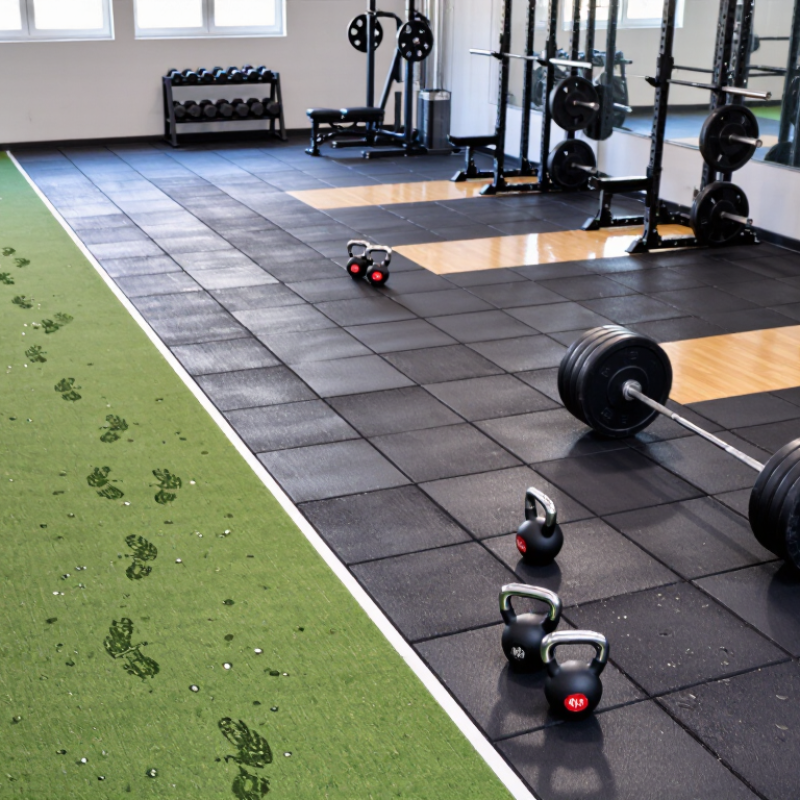
Flooring consultant and Regupol America executive Jim Kelsey has emphasized a practical principle: “The floor is the foundation of the training environment.” That idea is easy to overlook. Rubber rolls may suit free-weight zones, while dense tiles can simplify replacement beneath machines. Turf may improve sled work, but it can create trip risks near transitions. Installation quality matters just as much as material selection.
There is no perfect Gym Flooring system. That is the uncomfortable part. A cheaper option may fail sooner under Olympic lifting. A premium surface may still perform poorly without correct subfloor preparation. In 2026, buyers should compare impact ratings, slip resistance, recycled content, emissions documentation, warranty terms, and cleaning requirements. The strongest choice is measurable, maintainable, and appropriate for each training zone.
How to Choose Gym Flooring in 2026?
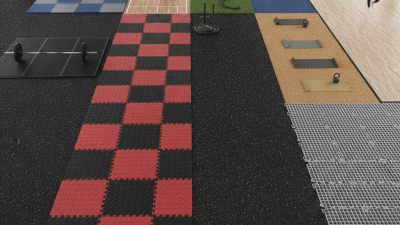
Gym flooring starts with use, not appearance. Rubber handles dropped weights, repeated impact, and rolling equipment well. Vinyl offers easier cleaning and a firmer surface for group training. Foam feels softer, but it can compress under racks and heavy machines. That weakness matters.
The Global Wellness Institute valued the physical activity economy at 976 billion dollars in 2022. More active facilities mean greater demands on durable, maintainable floors. The 2024 Health & Fitness Association report recorded 72.9 million American fitness-facility members in 2023. High traffic requires stable seams, good traction, and simple repairs. Check slip resistance, impact absorption, indentation recovery, and acoustic performance. ASTM and EN testing methods can help compare these properties, although test results rarely predict every real-world condition.
Thickness should match the training zone. Weight areas often need dense rubber with greater shock protection. Cardio spaces may need thinner, smoother surfaces for easier movement. Wet cleaning, sweat, chalk, and sunlight can expose poor finishes quickly. Ask for installation guidance, emissions information, and maintenance instructions. I have seen attractive floors fail around rack edges because the subfloor was ignored. The mistake is easy to repeat. Measure moisture, flatness, drainage, and door clearance before ordering. A lower-cost floor may still be sensible in a light-use studio, but not beneath repeated barbell drops. Performance should be judged over years, not during the first showroom visit.
| Flooring Option | Primary Material | Typical Thickness | Best Applications | Impact Protection | Noise Control | Durability | Water and Chemical Resistance | Key Considerations |
|---|---|---|---|---|---|---|---|---|
| Rubber Rolls | Recycled or virgin rubber, usually vulcanized | 6–15 mm for general training; 15–30 mm for heavier lifting | Weight rooms, functional training areas, commercial gyms | High | High; helps reduce dropped-weight and equipment noise | Very high when properly installed and maintained | Good resistance to water; some cleaners, oils, and solvents may cause damage | Provides strong shock absorption and seamless coverage, but may have an initial rubber odor and requires accurate cutting. |
| Rubber Tiles | Solid rubber or rubber composite | 10–30 mm; thicker tiles are used under lifting platforms | Free-weight zones, small studios, replacement-friendly installations | High to very high | High | Very high; individual tiles can be replaced | Good, provided seams and subfloor drainage are managed | Easy to transport and repair; seams may be visible, and loose-lay tiles can shift without suitable edge control. |
| EVA Foam Tiles or Mats | Closed-cell ethylene-vinyl acetate foam | 10–25 mm for light exercise; thicker options are available | Yoga, stretching, children’s areas, martial arts, home workouts | Medium | Medium to high | Low to medium under heavy equipment or repeated impact | Good water resistance; some disinfectants, heat, and sharp objects can damage the surface | Lightweight, comfortable, and economical, but it can compress, dent, or tear under heavy loads. |
| PVC or Vinyl Rolls | Polyvinyl chloride with a wear layer | 2–8 mm for fitness areas; specialist systems may be thicker | Cardio zones, group exercise studios, multipurpose rooms | Low to medium, depending on backing and underlayment | Low to medium | High in moderate-impact areas | Very good surface resistance to water and routine cleaning chemicals; seams must be properly sealed where needed | Offers many colors and patterns and is easy to clean, but it is not the first choice for repeated heavy weight drops. |
| Polyurethane Sports Flooring | Resilient polyurethane surface over a cushioned or rigid base | Typically 3–12 mm, depending on the system | Indoor courts, studios, athletic training, multipurpose sports spaces | Medium to high | Medium; underlayment strongly affects results | High with professional installation and periodic maintenance | Very good resistance to water and abrasion; compatibility with disinfectants should be confirmed | Creates a seamless, attractive surface, but installation is more specialized and the subfloor must be properly prepared. |
| Artificial Turf | Polyethylene or polypropylene fibers with a backing system | Pile heights commonly range from 10–25 mm; shock pads may be added | Sled pushing, agility drills, speed training, and functional circuits | Low to medium without a pad; medium to high with a suitable underlay | Low to medium | High when seams, fibers, and infill are maintained correctly | Good water drainage; sweat, dirt, and infill require regular cleaning | Supports directional movement and sled work, but is less suitable for sharp pivots, heavy free-weight drops, or frequent chalk buildup. |
| Interlocking Multi-Layer Flooring | Rubber, foam, PVC, or composite layers with interlocking edges | 8–25 mm, depending on the intended training load | Home gyms, temporary facilities, mixed-use training areas | Medium to high | Medium to high | Medium to high; depends on layer bonding and joint stability | Usually good; moisture can collect beneath poorly ventilated or loose-laid systems | Fast to install and easier to remove, but uneven subfloors may cause movement, gaps, or premature wear. |