Leave Your Message

10 Best Sports Flooring Options for Gyms and Schools

Choosing the right Sports Flooring is not a cosmetic decision. It affects traction, impact control, comfort, noise, maintenance, and long-term operating costs. In a busy school gym, the surface may absorb thousands of foot strikes each week. A poor choice can show itself through glare, slippery dust, damaged seams, or tired athletes.

Industry data supports closer attention. The Sports Flooring Global Market Report 2024, published by The Business Research Company, estimates that the market will continue growing as schools, fitness centers, and sports facilities invest in safer, more durable surfaces. Grand View Research also identifies polyurethane, rubber, vinyl, and wood systems as major flooring categories, each serving different performance and budget needs. These figures are useful, but they do not replace a site inspection.

As biomechanics researcher Dr. R. J. Nigg has stated, “The interaction between the athlete and the surface is critical.” That principle guides this comparison. A basketball court needs controlled ball response and reliable traction. A weight room needs impact resistance and stable footing. A multipurpose school hall may need one surface to handle sports, assemblies, chairs, and daily cleaning.

There is no perfect floor.

The best option depends on use, subfloor condition, climate, cleaning routines, and available funding. Some products look economical but require frequent refinishing. Others offer excellent resilience yet feel too firm for certain activities. The following guide examines ten leading Sports Flooring options for gyms and schools, including their strengths, limitations, safety considerations, and practical maintenance demands.
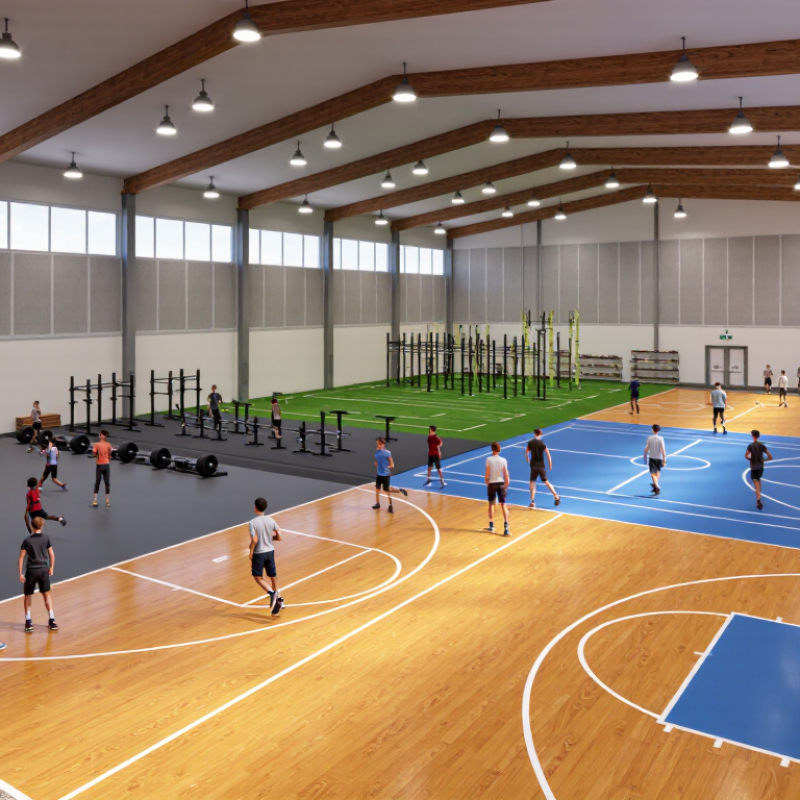
10 Best Sports Flooring Options for Gyms and Schools

What Makes a Sports Floor Suitable for Gyms and Schools

A suitable sports floor must protect users during repeated stops, jumps, and falls. ASTM F2772 specifies force reduction between 10% and 33% for indoor sports surfaces. European standard EN 14904 uses a broader 25% to 75% range. These figures are not interchangeable. They reflect different testing methods and performance expectations. Independent laboratory testing matters.

Shock absorption is only one factor. A gym floor should provide controlled grip without trapping shoes during pivots. Too much traction can strain knees. Too little can cause sudden slips. Surface uniformity also matters. The National Flooring Safety Institute identifies coefficient of friction as a key factor in slip resistance. Facility managers should request wet and dry test results, especially for school entrances and multipurpose halls. Small defects become serious during fast play.

Durability deserves equal attention. A school floor may face chairs, assemblies, sports equipment, and daily cleaning. Look for stable vertical deformation, resistance to indentation, and easy maintenance. Wood, synthetic systems, and modular surfaces can all work when correctly specified. Not every attractive floor performs well under heavy use. That is the uncomfortable part. A lower purchase price may create higher repair costs later. Ask for test reports, installation records, and a maintenance schedule before choosing.
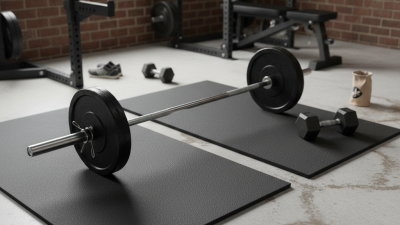
Ten Sports Flooring Options and Their Best Applications

Choosing among ten sports flooring options depends on the activity, building, and maintenance routine.

Solid maple remains a strong choice for basketball and volleyball because it provides consistent ball response and controlled traction. Engineered wood suits multipurpose halls where humidity changes may affect natural timber. Rubber rolls support weight rooms, fitness areas, and indoor tracks. EPDM tiles handle heavy training and offer useful impact protection.

Vinyl sports flooring works well in schools hosting different activities, including dance, badminton, and community events. Seamless polyurethane creates a durable surface for courts and can reduce cleaning problems around joints. Modular polypropylene tiles fit temporary courts and outdoor facilities because damaged sections can be replaced individually.

Cork feels warm and comfortable in studios, though it may require more careful moisture control. Artificial turf supports indoor soccer, speed drills, and field-sport training. Carpet athletic flooring can suit low-impact movement rooms, but it is not ideal for aggressive pivoting.

Tips:

Test the floor with actual users before installation. Check traction with sports shoes, not casual footwear. Ask for verified impact, slip, and fire-performance data. Review the subfloor carefully; even premium materials perform poorly over uneven concrete. Maintenance matters more than many planners expect. Dust, sweat, and moisture change grip over time. I have seen attractive floors fail because drainage and cleaning access were ignored. No option wins everywhere. A school may prefer vinyl for flexibility, while a serious court may need sprung wood. Reconsider the budget after including installation, repairs, and scheduled refinishing.

How to Compare Safety, Performance, Cost, and Durability

10 Best Sports Flooring Options for Gyms and Schools

Choosing sports flooring requires more than comparing attractive samples. Safety should lead the evaluation. Check impact absorption, slip resistance, joint comfort, and ball response under dry and damp conditions. A basketball court may favor sprung wood or resilient synthetic flooring. A weight room often needs dense rubber tiles for shock control and dropped equipment. Schools may prefer cushioned vinyl, cork, or polyurethane systems where cleaning and accessibility matter.

Performance depends on the activity and installation quality. Measure vertical deformation, ball rebound, traction, and sound reduction. A floor that feels fast for basketball may feel unstable during fitness classes. Look closely at seams, transitions, and edge ramps. Small height changes can catch shoes. They matter. Ask for independent test reports, maintenance records, and installation references from comparable facilities. Practical evidence is stronger than a sales claim.

Cost should include preparation, installation, cleaning, repairs, and replacement. Low-cost tiles can become expensive when edges curl or odors persist. Durable rubber may withstand years of heavy training, while wood needs controlled humidity and refinishing. Synthetic surfaces can clean quickly but may show wear in busy corridors. No option wins every category. I would also inspect the floor after several weeks of real use, because early assumptions can be wrong. A careful comparison records maintenance time, visible damage, noise, and user feedback beside the purchase price.

10 Best Sports Flooring Options for Gyms and Schools — How to Compare Safety, Performance, Cost, and Durability
Flooring Option Typical Installed Cost
(USD per sq. ft.)
Impact Protection Traction and Ball Response Durability and Expected Service Life Maintenance Requirements Best Applications Main Limitations
Solid Hardwood Sports Flooring $8–$18 High
When installed over a sprung subfloor
Excellent traction and highly consistent ball bounce 20–40 years with periodic sanding and refinishing Frequent dust removal; use approved cleaners; refinish when wear becomes visible Basketball, volleyball, multipurpose gymnasiums, competitions Sensitive to moisture, subfloor movement, and standing water; higher upfront cost
Synthetic Wood-Look Sports Flooring $6–$14 High
Varies by cushion and subfloor system
Very good traction and reliable ball response 12–25 years with proper cleaning and recoating Routine sweeping and damp mopping; periodic protective coating may be needed Schools and community gyms needing wood-like performance with lower maintenance Surface quality varies; some systems can be difficult to repair invisibly
Rubber Tile Flooring $5–$12 High
Good cushioning and slip resistance
Good grip; ball response is moderate rather than competition-level 15–25 years in heavy-use areas Sweep or vacuum regularly and damp mop with a neutral cleaner Fitness rooms, weight rooms, corridors, multipurpose activity spaces Can retain odor initially; seams may collect dirt; less suitable for elite basketball
Poured-in-Place Rubber $8–$18 High
Seamless cushioning helps reduce impact
Good traction; ball bounce is less uniform than on hardwood or vinyl 10–20 years depending on traffic, UV exposure, and installation quality Simple sweeping and damp mopping; damaged sections can require specialist repair Indoor training zones, play areas, fitness spaces, and some outdoor facilities Higher installation cost; texture and color can change with wear or sunlight
Sports Vinyl Sheet Flooring $5–$12 Medium to High
Depends on foam backing and subfloor
Good traction and predictable ball response for school-level sports 10–20 years with correct cleaning and moisture control Regular dust removal and damp mopping; protect seams from moisture Multipurpose gyms, dance rooms, classrooms, and recreational courts Subfloor imperfections can telegraph through the surface; sharp objects can puncture it
Poured Polyurethane Sports Flooring $8–$16 High
Can be specified with resilient cushion layers
Consistent traction and good ball response when correctly textured 15–25 years; topcoat renewal may extend service life Low daily maintenance; periodic recoating helps preserve appearance and performance High-use school gyms, indoor courts, and multipurpose athletic facilities Installation is sensitive to humidity and substrate preparation; repairs may be visible
Linoleum Sports Flooring $5–$10 Medium
Some products include resilient backing
Good traction with moderate ball response 15–25 years when sealed and maintained correctly Frequent sweeping, damp mopping, and periodic sealing or surface treatment Schools, studios, multipurpose rooms, and lower-impact sports areas Moisture can damage the material; not usually the first choice for top-level court play
Cork Sports Flooring $6–$12 High
Naturally resilient and comfortable underfoot
Good traction; ball response is less lively than hard court surfaces 10–20 years depending on finish, traffic, and moisture exposure Gentle cleaning and regular finish maintenance; avoid excessive water Dance, yoga, early-years education, studios, and low-impact activity rooms Can dent, fade, or swell when exposed to heavy loads, moisture, or rough use
Modular Polypropylene Sports Tiles $4–$10 Medium
Some designs provide limited flex and cushioning
Good drainage and traction; ball response is adequate but less refined 10–20 years, especially in properly prepared indoor or outdoor areas Easy sweeping and occasional pressure washing where permitted Outdoor courts, temporary gyms, community facilities, and rapid installations Interlocking joints may shift; surface can become slippery when contaminated or wet
Athletic Carpet Tile $3–$8 Medium
Comfortable for training but not designed for hard court play
Good foot stability for fitness and general training; poor ball bounce 8–15 years; individual damaged tiles can be replaced Frequent vacuuming, spot cleaning, and periodic deep extraction Fitness rooms, indoor training areas, corridors, and general activity spaces Absorbs spills and odors; unsuitable for basketball, volleyball, and wet environments
Note: Cost and service-life figures are typical planning ranges for commercial installations in the United States. Actual results depend on subfloor preparation, climate, installation quality, traffic levels, maintenance, and the complete flooring system.

Installation Requirements for Different Sports Flooring Systems

Installation begins with the slab, not the sports surface. Concrete must be clean, flat, dry, and structurally sound. ASTM F710 recommends testing concrete moisture before resilient flooring installation. Surface grinding may be necessary when adhesive residue, dust, or uneven patches remain. A small ridge can become a visible bounce under a basketball court.

Different systems demand different bases. Hardwood courts need a level concrete slab, moisture control, and an engineered sleeper or resilient pad system. The wood must acclimate inside the building before installation. According to EN 14904, indoor sports floors should provide 25% to 75% force reduction. The standard also limits vertical deformation to approximately 5 millimeters. These figures affect athlete comfort, ball response, and long-term maintenance. Installation teams should also leave movement gaps around walls and fixed equipment.

Synthetic sheet flooring needs tightly joined seams and carefully spread adhesive. Rubber tiles require a stable substrate and accurate alignment around court markings. Artificial turf needs drainage planning, compacted subbase layers, and secure perimeter edges. The U.S. Environmental Protection Agency generally recommends indoor relative humidity between 30% and 50%, which helps control wood movement and adhesive performance. Climate control is often ignored. That mistake is expensive. School projects also need clear curing periods, ventilation, and moisture retesting before opening. On complex sites, a written inspection record is useful, although many teams still rely too heavily on visual checks.

10 Best Sports Flooring Options for Gyms and Schools

Typical System Thickness and Installation Requirements

The chart compares typical finished system thicknesses for ten sports flooring options. Thickness varies by construction, cushioning layers, subfloor conditions, and local specifications.

Installation generally requires a clean, dry, and level subfloor. Hardwood and resilient systems need careful moisture testing and expansion planning, while rubber, vinyl, linoleum, and polyurethane systems typically require adhesive bonding and detailed seam preparation. Outdoor acrylic, modular tile, and artificial turf systems require suitable drainage, weather-resistant substrates, and adequate surface drainage.

Maintenance, Cleaning, and Replacement Considerations

10 Best Sports Flooring Options for Gyms and Schools
Maintenance, Cleaning, and Replacement Considerations
A sports floor’s lifespan depends on daily habits, not only its material. Hardwood needs regular dust removal and controlled moisture. Rubber flooring handles heavy traffic well, but grit can still create dull, worn paths. Vinyl and polyurethane surfaces require gentle cleaners that do not leave slippery residue. In school gyms, inspect entrances often. Sand and outdoor debris usually arrive through those doors.
Cleaning should follow the flooring manufacturer’s care instructions and the facility’s actual usage. Sweep or vacuum before mopping, because loose grit can act like sandpaper. Remove spills quickly, especially near basketball courts and changing areas. Check seams, corners, and surface bubbles every month. A small lifted edge can become a tripping hazard. Replacement should be planned before visible failure spreads. Still, replacement timing is not always obvious. A floor may look acceptable while losing traction or shock absorption. Professional testing can reveal these hidden problems.
Tips: Use separate cleaning tools for courts and restrooms. Keep moisture controlled. Record repairs with dates and photos. Ask staff to report unusual slipping, squeaking, or soft spots. Do not assume a stronger chemical cleans better. It may damage the finish. Review the maintenance plan each season, because attendance, weather, and sports programs change.