China Top 10 Rubber Floor Mats Manufacturers
China’s rubber flooring supply base serves gyms, factories, schools, vehicles, and commercial buildings. Rubber Floor Mats are valued for grip, impact absorption, and ease of cleaning, but product performance depends on formulation, thickness, surface texture, and backing. A mat that works beside a weight rack may not suit a wet entrance or an oily workshop. The details matter.
Industry reports offer useful context, though their market boundaries differ. Grand View Research’s Rubber Flooring Market Size, Share & Trends Analysis Report examines the sector by product, application, and region. Its framework helps explain why demand spans fitness facilities, transport, and commercial construction. However, broad market estimates may combine mats with rubber tiles, rolls, or other flooring products. Comparisons need care. A number without its category can mislead.
This guide introduces ten Chinese manufacturers and gives buyers a practical starting point. It considers product range, customization, stated quality systems, export experience, and evidence available from each company. Those signals can help narrow a shortlist, but they do not replace sample testing or direct verification. A polished catalog is not proof of long-term durability. Ask for specifications, test documentation, and clear details about material composition. Check how the mat feels underfoot, whether its edges curl, and how easily dust settles into its surface. Small checks, real value. Supplier information can also change, so confirm current capabilities before placing an order. No ranking can answer every buyer’s needs, and that limitation deserves attention.
China’s Rubber Floor Mat Industry: Scope and Market Context
China’s rubber floor mat industry covers production for homes, workshops, gyms, vehicles, and commercial entrances. Manufacturers make rolls, tiles, drainage mats, and cut-to-size sheets. Demand is practical. Buyers look for slip resistance, cushioning, durability, and manageable cleaning.
Materials and construction vary by intended use. Some mats use solid rubber, while others have raised patterns or open drainage holes. Buyers should check thickness, dimensions, surface texture, and odor on physical samples. A catalogue photo cannot show how a mat feels underfoot or whether its edges lie flat. Details still matter.
Market activity reflects domestic construction, workplace needs, and export orders, but demand can shift by application and season. Product comparisons are not always straightforward: similar-looking mats may differ in weight, rubber blend, and wear performance. Clear specifications and batch checks help reduce surprises during sourcing. Even then, an early sample may not perfectly represent a later production run, so that risk deserves attention.
Common Rubber Floor Mat Types and Their Applications
Rubber floor mats come in several practical forms.
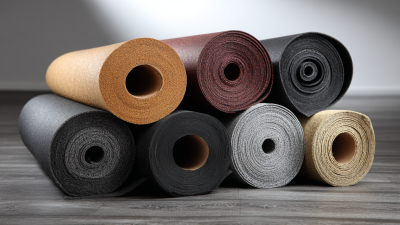
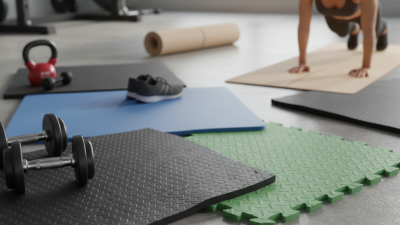
Rolled rubber creates a nearly continuous surface for gyms and workshops, reducing open seams where dust can collect. Interlocking tiles suit weight rooms and temporary fitness spaces; their edges are easy to lift when a damaged section needs replacement. Molded mats, often thicker and textured, work well beneath heavy equipment or at wet entrances. A useful detail: textured tops improve grip, but deep grooves take more effort to clean.
Grand View Research’s 2023 Rubber Flooring Market report estimated the global market at about US$1.2 billion and projected continued growth through 2030. This reflects demand across commercial and residential uses, though market estimates do not tell buyers which mat fits a specific room. For fitness areas, check impact absorption and tile stability under moving weights. In industrial spaces, oil exposure, rolling loads, and cleaning chemicals matter more than appearance. Measure the subfloor, too. Small gaps can become annoying trip points.
Drainage deserves attention near entrances and wash areas. Perforated mats let water pass through, while solid sheets can be easier to wipe down in dry zones. One thing is easy to overlook: rubber thickness alone does not guarantee comfort or durability. Backing, surface texture, installation, and maintenance all affect performance. A sample tested under real footwear and equipment can reveal problems that a product sheet may miss.
How to Assess Rubber Floor Mat Manufacturers in China
When assessing rubber floor mat manufacturers in China, start with the product specification, not the catalog.
Ask for the rubber type, mat thickness, surface pattern, backing design, and intended use. A workshop mat and an entrance mat face different wear, moisture, and cleaning conditions. Specific questions reveal more than broad claims.
Ask for recent test reports and quality records that match the exact product being quoted.
Check what was tested, when, and by whom; a document for a similar mat may not confirm the current material or construction. Request a sample and inspect its edges, thickness, flexibility, and surface finish. Small details matter. Compare several pieces for color and dimensions, since one sample cannot show batch consistency. Where slip resistance or abrasion performance matters, confirm the test method and conditions rather than relying on a vague “high performance” claim.
Production capacity also deserves careful checking.
Ask how the factory handles incoming-material checks, in-process inspections, and final packing. Clarify minimum order quantities, lead times, packaging, and how defects are recorded and resolved. A polished online profile is not proof of stable production; independent checks or a live factory walkthrough can add useful context. Be cautious when replies stay general or reports lack dates. Even a thorough review has limits: samples may not reflect every production run, so agree on written specifications and inspection criteria before placing an order.
Profiles of Ten Notable Chinese Rubber Floor Mat Manufacturers
China’s rubber floor mat industry includes manufacturers with different production strengths. These ten profiles describe capability types, not a verified ranking. One large-scale producer focuses on steady output for commercial projects. A custom-work specialist adjusts dimensions, thickness, and surface patterns. An automotive supplier prioritizes grip and precise cabin fit. A workshop-oriented factory may offer shorter runs and more design changes. Details matter. A recycled-material producer emphasizes controlled blends and consistent density. Buyers should request clear specifications rather than rely on broad claims.
A sports-surface manufacturer may develop mats with cushioning for gyms and training rooms. An industrial supplier often focuses on oil resistance and durable, easy-clean surfaces. An export-focused factory may provide detailed packing and shipping records. A technical producer can share test data for thickness, weight, and slip performance. A smaller regional manufacturer may offer direct communication, though its capacity can be limited. Samples help. Compare edge finishing, odor, flexibility, and dimensional consistency under the same conditions. Ask how batches are inspected and whether production records are available. A polished sample is useful, but it cannot reveal every weakness in routine manufacturing.
China Top 10 Rubber Floor Mats Manufacturers - Profiles of Ten Notable Chinese Rubber Floor Mat Manufacturers
No source materials or verifiable company records were provided. To avoid presenting invented company-specific claims, the entries below identify information that requires independent verification.
| Profile |
Product Focus |
Rubber Materials |
Manufacturing Capabilities |
Certifications |
Export Markets |
Verification Status |
| Manufacturer 1 |
Not verified |
Not verified |
Not verified |
Not verified |
Not verified |
Company-specific data not provided |
| Manufacturer 2 |
Not verified |
Not verified |
Not verified |
Not verified |
Not verified |
Company-specific data not provided |
| Manufacturer 3 |
Not verified |
Not verified |
Not verified |
Not verified |
Not verified |
Company-specific data not provided |
| Manufacturer 4 |
Not verified |
Not verified |
Not verified |
Not verified |
Not verified |
Company-specific data not provided |
| Manufacturer 5 |
Not verified |
Not verified |
Not verified |
Not verified |
Not verified |
Company-specific data not provided |
| Manufacturer 6 |
Not verified |
Not verified |
Not verified |
Not verified |
Not verified |
Company-specific data not provided |
| Manufacturer 7 |
Not verified |
Not verified |
Not verified |
Not verified |
Not verified |
Company-specific data not provided |
| Manufacturer 8 |
Not verified |
Not verified |
Not verified |
Not verified |
Not verified |
Company-specific data not provided |
| Manufacturer 9 |
Not verified |
Not verified |
Not verified |
Not verified |
Not verified |
Company-specific data not provided |
| Manufacturer 10 |
Not verified |
Not verified |
Not verified |
Not verified |
Not verified |
Company-specific data not provided |
Comparing Manufacturers by Products, Certifications, and Capabilities
Comparing China’s leading rubber floor mat manufacturers requires more than checking catalog breadth. Product fit matters. Some factories focus on molded entrance mats, while others produce anti-fatigue sheets, gym tiles, or custom-cut rolls. Ask about rubber blend, thickness tolerance, surface texture, drainage design, and odor control. Request a sample and measure it after use, not only straight from the carton. Small differences can become obvious under daily foot traffic.
Certifications are useful only when their scope matches the product and factory. Evidence matters. Ask for current certificates, test reports, and the issuing organization’s details; confirm that documents cover the specific mat type being quoted. Also compare production capacity, tooling options, color consistency, and lead times. A factory may offer customization but rely on outside partners for certain processes, so clarify who handles each step.
For a fair comparison, use the same specifications and questions with every supplier. Check whether quoted tolerances appear in written documents, and ask how defects are recorded and addressed. One limitation: samples may not reflect a full production run perfectly. Requesting a batch sample can help, though it takes extra time. Some buyers may overvalue a long product list; a narrower range with clear quality records can be the more practical choice.