Leave Your Message

How to Choose the Best Sports Flooring?

Choosing the best Sports Flooring begins with the athletes, not the product catalogue. A basketball court needs controlled traction, predictable ball response, and impact protection. A school gym also needs easy cleaning, quiet movement, and resistance to heavy daily use.

Grand View Research estimates that the global sports flooring market will continue expanding through 2030, supported by new gyms, schools, and multi-purpose arenas. Its market analysis highlights rubber, vinyl, polyurethane, and wood systems as major categories. These materials behave differently under humidity, footwear, and repeated loading. The International Association of Athletics Federations also stresses that surface performance must be tested, not judged by appearance alone. ASTM F2772 provides performance criteria for indoor sports floors, including force reduction, vertical deformation, and ball rebound.

As sports-flooring specialist Steve Fink has said, “The floor is the most important piece of equipment in the gym.” That view is practical. A polished surface may look impressive under bright lights, yet still feel slippery during a fast change of direction. A softer floor may reduce impact, but excessive deflection can affect stability. Small details matter, including subfloor flatness, moisture control, seam quality, and maintenance routines.

There is no perfect floor.

The right choice depends on sport, traffic, climate, budget, and athlete age. Facility managers should request independent test results, installation references, and lifecycle costs. Product brochures are useful, but they are not proof. A careful comparison may reveal uncomfortable compromises, especially when a low purchase price creates higher repair costs later.
How to Choose the Best Sports Flooring?

Define the Sports Flooring Needs for Each Activity

How to Choose the Best Sports Flooring?

Define the Sports Flooring Needs for Each Activity

Every sport creates different demands on the floor. Basketball needs consistent ball rebound, controlled grip, and reliable shock absorption. Indoor volleyball requires cushioning for repeated jumps and quick lateral movement. A surface that feels excellent for one sport may slow another.

Start with the athletes, equipment, and movement patterns. Measure impact, sliding, traction, and rolling loads in the actual facility. A sports floor should reduce stress without feeling soft or unstable. Too much grip can strain knees during sudden turns. Too little grip can increase slipping risks. Small differences matter.

Consider moisture, temperature, cleaning routines, and daily traffic. Wooden systems may need careful humidity control, while synthetic surfaces often tolerate heavier use. Check performance data against recognized sports standards, then request site-specific testing. Manufacturer claims are useful, but real measurements are stronger evidence. A sample area can reveal glare, noise, and unexpected shoe interaction.

Maintenance also shapes performance. Dust changes traction. Worn coatings change ball response. I once underestimated entrance dirt, and the playing area needed cleaning far more often than planned. That mistake was avoidable. Talk with coaches, facility staff, and qualified flooring professionals before choosing materials. Their daily experience may expose needs that a specification sheet misses.
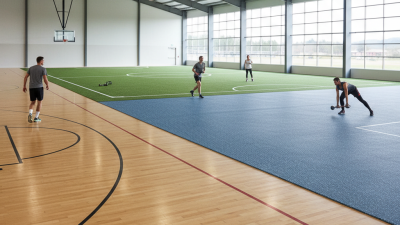
Compare Key Sports Flooring Materials and Surface Types

How to Choose the Best Sports Flooring?

Choosing sports flooring starts with the athlete, not the room’s appearance. A basketball court needs controlled grip, predictable ball response, and enough shock absorption. A fitness studio may need quieter flooring and stronger resistance to dropped weights. Climate, subfloor condition, cleaning routines, and daily traffic also affect the decision.

Hardwood provides a familiar feel, consistent bounce, and a polished appearance. Its sprung construction can reduce stress on athletes during repeated movement. However, wood may react to humidity and requires careful refinishing. Polyurethane surfaces offer seamless installation, flexible cushioning, and simple maintenance. They suit multipurpose halls, although incorrect thickness can make the floor feel slow or unstable. Rubber flooring handles heavy equipment and impact well. It is practical for training areas, but its texture may not suit fast court sports.

Vinyl delivers smooth movement and many surface options. It can work in schools and community facilities, yet seams and moisture beneath the surface need close attention. Acrylic coatings are durable for outdoor courts and provide reliable traction when installed correctly. They can become harsh underfoot without a suitable base. Surface type matters as much as material: point-elastic floors cushion beneath each foot, while area-elastic systems distribute force across a wider section. Combined systems offer broader protection, but they usually cost more. No surface is perfect. A flooring sample can feel excellent in a showroom, then disappoint under real shoes, dust, and weekend crowds. Test it in the actual space.

How to Choose the Best Sports Flooring?

Compare key sports flooring materials and surface types by typical installed thickness. Thickness is a practical starting point, but shock absorption, ball response, slip resistance, durability, and maintenance requirements should also be checked against the project specification.

Hardwood

Area-elastic systems commonly use wood boards around 20–22 mm thick and are widely selected for indoor court sports.

PVC

Point-elastic PVC sports surfaces are often supplied in approximately 4.5–8 mm system thicknesses.

Polyurethane

Seamless polyurethane systems commonly range from about 3–12 mm, depending on the sports and subfloor requirements.

Rubber

Rubber rolls and tiles are frequently available in approximately 6–12 mm thicknesses for multipurpose or training areas.

The chart shows typical product-system ranges rather than a certification result. Actual performance depends on the complete floor build-up, subfloor, installation method, and local requirements. Verify shock absorption, vertical deformation, slip resistance, and ball rebound against the applicable sports-flooring standard, such as EN 14904 or ASTM F2772.

Evaluate Safety, Performance, Comfort, and Durability

How to Choose the Best Sports Flooring?
Evaluate Safety, Performance, Comfort, and Durability

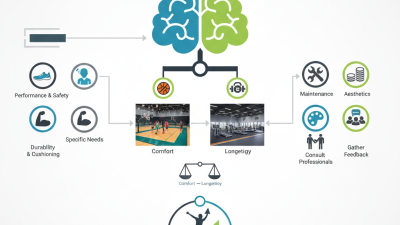
Start with the sport and the people who will use the space. A basketball court needs reliable grip and a predictable bounce. A fitness room may need more cushioning for repeated jumps. Look for a surface that limits slipping without feeling sticky under quick turns. Ask for test data on shock absorption and ball response, and compare it with the needs of your activities. Safety matters most.

Comfort is more than softness. A floor that feels pleasant during a brief visit may cause fatigue during a long practice. Check how it feels underfoot, especially in areas where athletes land or change direction. Durability also depends on daily conditions. Consider foot traffic, equipment loads, cleaning routines, and moisture near entrances. Scratches, loose seams, or worn patches can affect both play and safety. No floor is perfect; I have seen maintenance needs underestimated during planning.

Tips: Walk the space, inspect seams, and test the surface with sport-specific movements. Ask how often it needs cleaning and what repairs involve. Compare written performance specifications, not just appearance. If possible, test a sample after a full practice. A small trial helps, though it cannot predict every long-term issue.

How to Choose the Best Sports Flooring? — Evaluate Safety, Performance, Comfort, and Durability

Flooring Type Safety & Impact Absorption Sport Performance Comfort Durability & Care Often Suited To
Sprung hardwood High when correctly designed
Elastic subfloor systems can reduce impact on players; traction and shock response depend on the complete floor system.
Consistent ball bounce and grip make it a strong choice for court sports such as basketball and volleyball. Responsive underfoot, especially with a sprung subfloor. Can last for many years with appropriate care, but needs protection from moisture and periodic refinishing. Indoor courts, multi-purpose sports halls, and competition venues.
Polyurethane (PU) Moderate to high
Impact response varies with system thickness, backing, and installation.
Seamless surface can provide consistent traction for multi-sport use; ball response varies by system. Resilient surface can feel comfortable during running and court activities. Seamless construction is relatively easy to clean; wear resistance depends on the system and use. Indoor multi-sport halls, school gyms, and fitness areas.
Vinyl sports flooring Moderate to high
Foam-backed systems may add cushioning; not all vinyl products provide the same impact protection.
Can offer controlled grip and reliable play when selected for the intended sports and installed correctly. Cushioned versions feel softer than hard, unbacked surfaces. Generally straightforward to clean; seams, wear layers, and surface condition need regular inspection. Indoor courts, school facilities, and multi-purpose rooms.
Rubber flooring High cushioning in many systems
Thickness and density affect impact response; surface grip should suit the activity.
Stable and practical for strength training, but may not provide the ball bounce or slide characteristics required for court sports. Good underfoot cushioning for standing, walking, and many gym exercises. Typically robust in fitness environments; clean and maintain according to the product and facility requirements. Weight rooms, fitness studios, and functional training spaces.
Artificial turf System-dependent
Impact protection depends on the turf, infill, and any shock pad; footwear and maintenance also affect traction.
Designed for field-sport use; ball roll, bounce, and player interaction differ from natural grass. Provides a consistent playing surface, but feel varies with pile, infill, and underlay. Requires routine brushing and infill management; lifespan depends on usage, climate, and maintenance. Outdoor and indoor training areas for selected field sports.

Selection note: Ratings are general comparisons, not a substitute for product-specific test data. Verify that the complete flooring system is designed for the intended sport, footwear, user group, and facility conditions.

Match Flooring Features to the Facility and Playing Environment

The best sports floor is not chosen from a catalogue. It is matched to the facility, sport, climate, and daily workload. A school gym may need a resilient surface for basketball, assemblies, and frequent cleaning. A professional training hall may prioritize consistent ball response, traction, and impact protection. The building’s purpose should guide every decision.

Measure twice. Moisture matters.

Before installation, inspect the subfloor for uneven areas, cracks, and rising damp. A beautiful surface can fail when the base is poorly prepared. In humid regions, flooring should resist moisture movement and allow practical ventilation. In colder facilities, temperature changes may affect expansion joints and surface flexibility. These details are easy to overlook during a rushed project.

Player safety also depends on the playing environment. Test slip resistance with clean and slightly contaminated samples, not only under ideal showroom conditions. Check shock absorption, vertical deformation, ball bounce, and noise control through independent testing. A hard surface may feel fast, but it can increase stress during repeated jumping. A softer system may protect joints, yet feel unstable for quick turns. The correct balance depends on the sport and athlete level.

Maintenance deserves equal attention. Ask how often the floor needs recoating, how spills are handled, and whether local staff can complete routine care. Some facilities choose advanced systems but lack trained maintenance teams. That mismatch is costly. A simpler floor, properly maintained, may perform better over time. Reassess the choice after real use, because drawings rarely reveal every problem.

Estimate Installation, Maintenance, and Long-Term Costs

How to Choose the Best Sports Flooring?

Estimate Installation, Maintenance, and Long-Term Costs

A flooring quote is only the starting point. Ask for a site inspection that checks the subfloor, moisture, drainage, and access for delivery. Repairs or leveling can add costs before the surface is installed. Request an itemized estimate for materials, labor, preparation, line marking, and any required transitions. Compare quotes with the same scope; otherwise, a lower price may simply leave work out. Keep a contingency for surprises. Older buildings can hide them.

Maintenance shapes the real cost over time. Ask what routine cleaning requires, which products are suitable, and how often the surface needs inspection. For example, a busy gym may need frequent dust removal and prompt attention to scuffs near doors. Include staff time and replacement supplies in your budget, not just contractor fees. Also ask about repair methods and expected service life under your actual use. A surface used for daily classes may wear differently from one used occasionally. No estimate is exact. Revisit it after observing use for a season, and adjust the budget if cleaning, repairs, or downtime exceed expectations.